
In the blocky realm of Minecraft, where every tool tells a story and every build breathes with purpose, a new artisan emerged from the 1.21 update—a quiet, iron-bound wonder known as the Crafter. This block does not merely sit; it waits, listening to the whisper of redstone, ready to weave raw materials into finished treasures with the flick of a pulse. For the miner, the builder, the warrior who has lost one too many swords to the lava’s greedy maw, the Crafter stands as a humble yet tireless companion. It is a block that remembers recipes, a machine that sculpts the intangible into the tangible, and it has, over the years since 2024, quietly reshaped the way we think about repetition and labor in our cubic worlds.
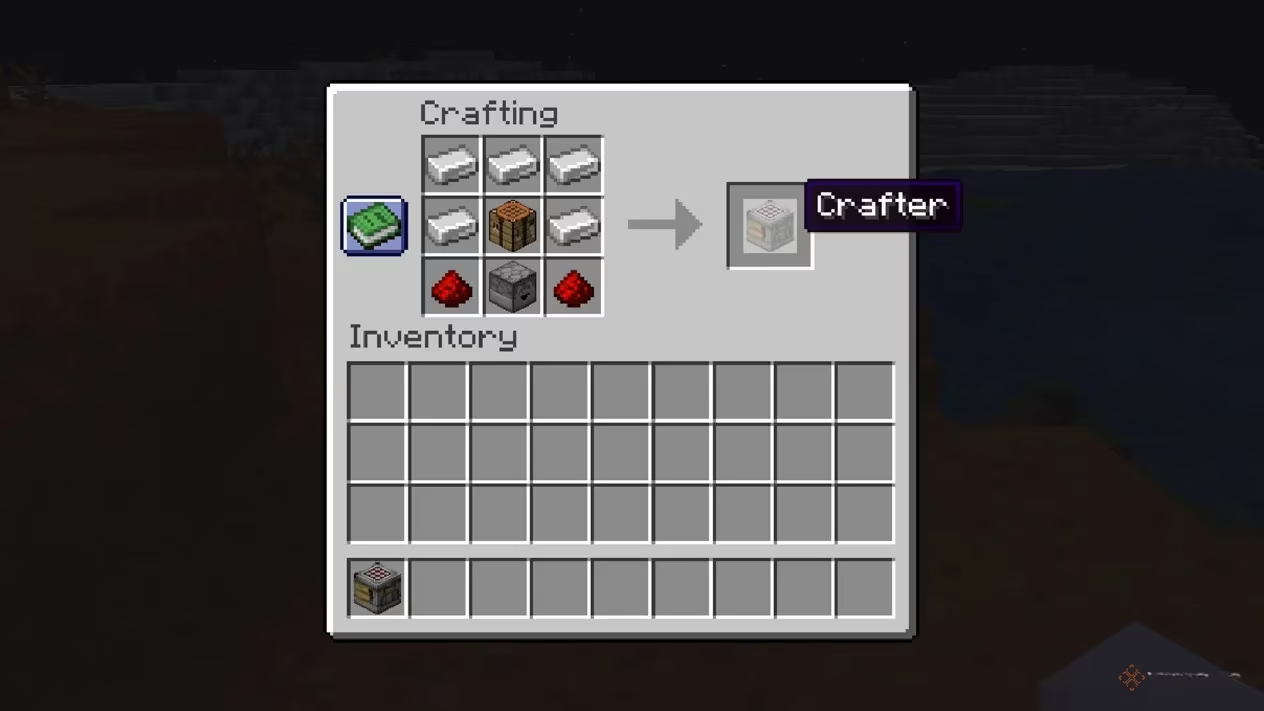
At its heart, the Crafter is a poet of precision. To bring one into existence, a player must gather materials that hum with the memory of earlier adventures: five iron ingots, forged in furnace fire; two pinches of redstone dust, the very lifeblood of automation; a dropper, that stoic funnel of things; and a crafting table, the ancestral altar of creation. Place them just so upon the grid, and the Crafter materializes, ready to be set onto the floor like a small, attentive forge. One might imagine it blinking awake, its jaw-like slots yawning open, eager to taste the components of a diamond blade or a sturdy shield.
Using the Crafter is a conversation, not a command. You lead the materials into their designated slots—two diamonds perched beside a lonely stick—and then you offer a tick of power, a gentle nudge from a lever or a button. And behold! With a soft, mechanical clunk, the crafted item is ejected, leaping into the world fully formed. There’s a quiet magic in that moment, the kind that makes you whisper, “Well, look at that—right from thin air, just like that.” The Crafter is not greedy; its slots can be disabled by a knowing click, a way to tell it, “This space is for the hopper’s gifts, not for your wandering thoughts.” By closing certain pockets, you guide the flow of ingredients, letting hoppers above and beside pour in their offerings like loyal servants bearing gifts.
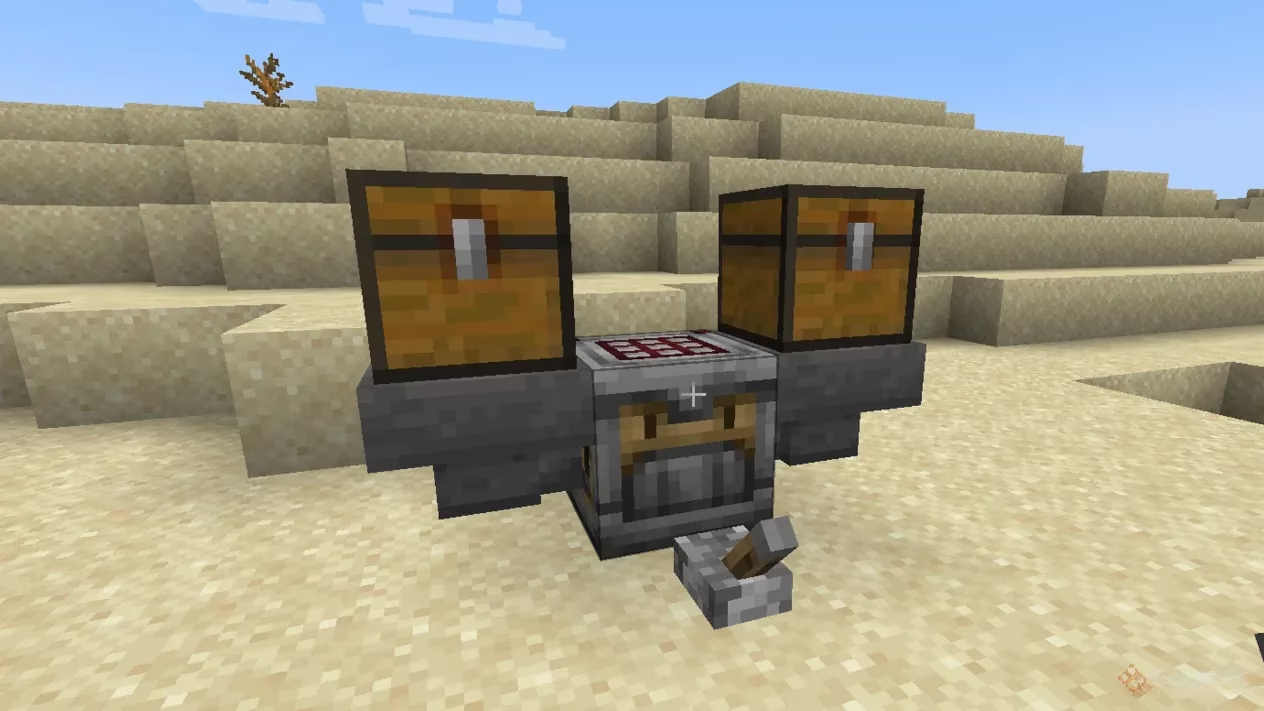
Imagine a scene: two hoppers hug the Crafter from either side, each topped with a chest. One chest brims with sturdy sticks, the other glints with diamonds. With slots directed and diodes of redstone logic pulsing, the Crafter absorbs these materials in the exact pattern of a diamond sword. When power arrives, the sword is born, and instantly, fresh materials slide from the chests into the empty spaces. It’s a dance that never tires. “She just keeps churning them out,” a seasoned architect might chuckle, watching the stream of pristine weaponry pile up. Yes, the Crafter shines brightest when you set it to repeat, to hum along with the rhythm of a redstone clock that never sleeps.
To truly unlock the Crafter’s voice, you need a looping redstone signal—a pulse that beats steady as a heart. The simplest of these loops is almost musical in its construction. Place a lever, then a line of redstone dust that leads to a sticky piston. Flick the lever and the piston pushes out, then retreats. Now, set an Observer directly in front, its solemn face staring at the piston’s shifting surface. Leave one block of space, then position a second Observer, turned to gaze back at the first. That space is essential; it is a pregnant pause, a breath between notes. Flip the lever, and the signal begins to loop, an endless whisper from one Observer to the next, a metronome made of stone and redstone. Turn the lever off, and the Crafter, placed beside the second Observer, will receive this heartbeat and begin its work. Every pulse says, “Create again.” Every item produced is a stanza in the automated poem.
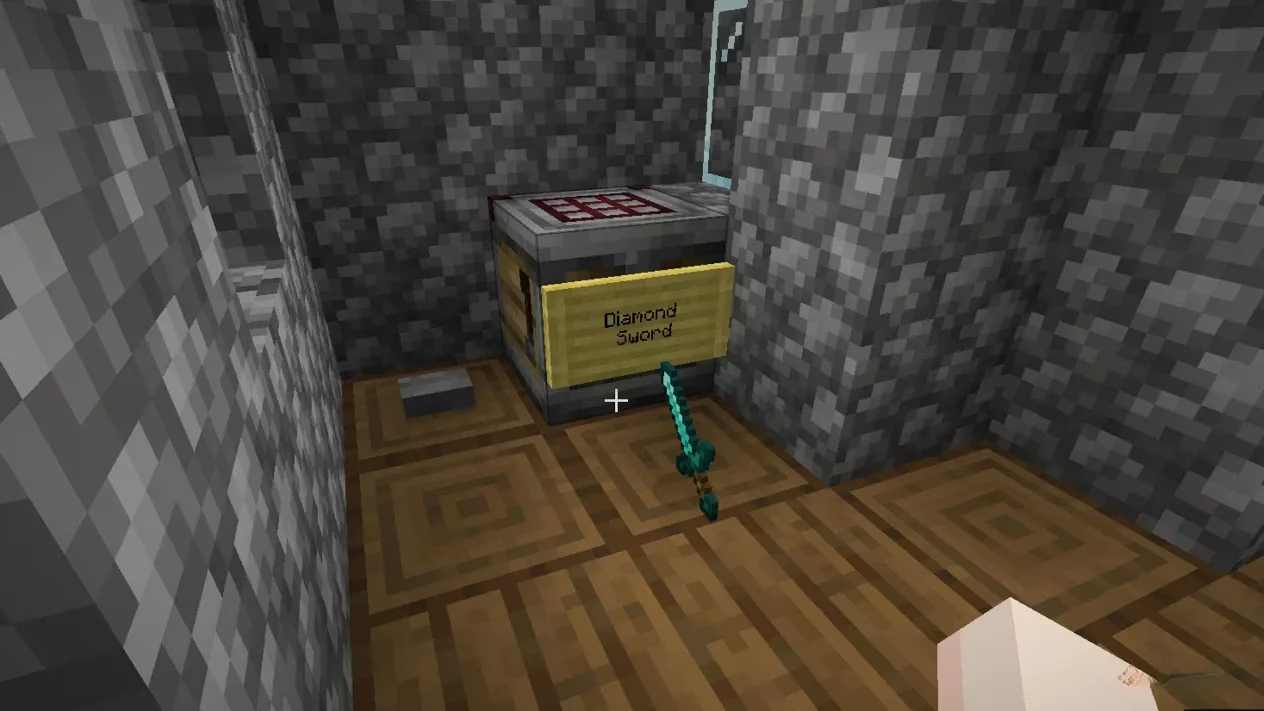
Why would one take the trouble to spin such a clockwork lullaby? The answer sits in chests that groan with unstackable goods. Bows, for instance, are beautiful but stubborn—they refuse to stack, each one demanding its own inventory slot. A Crafter linked to a loop can weave stick and string into bow after bow after bow, sending them into a dispenser array where they wait to arm a skeleton farm or defend a base. It’s a sight to see: “Out they pop, one by one, like biscuits from a magical oven,” a tinkerer might grin, watching the stream. Iron farms, too, benefit from a Crafter’s tireless hands. Instead of storing chests upon chests of iron ingots, let the Crafter compress them into iron blocks, saving space and adding a satisfying clunk of density to your storage. Even the simplest need—a replacement sword after a tragic creeper encounter—finds solace in a manual Crafter. Run a wooden button to its side, press it, and the Crafter delivers a fresh, gleaming weapon with a sound that says, “There you go. Don’t lose it again.”
In the years since its debut, the Crafter has proven itself not just a tool but a philosophy. It invites us to think in patterns, to treat creation as a loop rather than a labor. It has settled comfortably into the Minecraft zeitgeist alongside hoppers and composters, a quiet but firm reminder that with a little redstone poetry, even the most mundane task can become a gentle automation. The Crafter does not judge. It does not tire. It simply waits for the signal, eyes full of empty slots, ready to speak in swords, bows, and iron blocks. So next time you find the rhythm of clicking a crafting table turning into a dull, repetitive drumbeat, consider inviting this mechanical muse into your world. Give it power, give it direction, and let it sing.