
Gaming history is full of loud arrivals, but only a handful of titles actually kicked the door off its hinges. Ask players in 2026 what changed the medium, and the same names keep surfacing. The ten games below did not just sell well; they rewired expectations, business models, design habits, and the way people talk about games. Some did it with a toolbox, some with a horse, and one with two paddles and a ball. 🎮
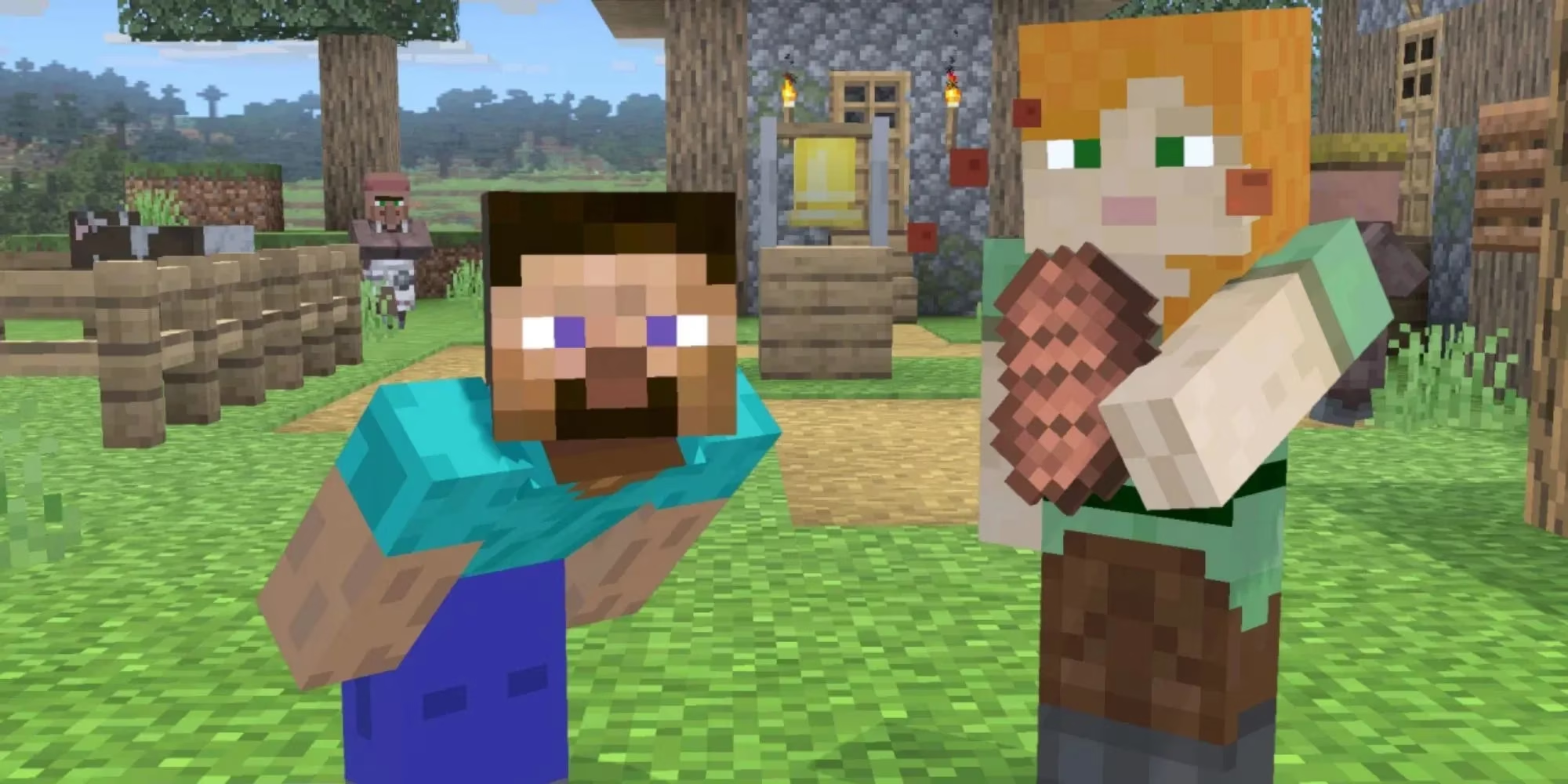
Minecraft: the sandbox that handed players the keys
Minecraft strolled in, handed players a virtual toolbox, and basically said, go build something. That sounds simple now, but in 2026 it is easy to forget how much the industry borrowed from that idea. Open-ended creation, shared worlds, roleplay, and player-driven adventures are now standard features in major releases. Minecraft proved that players would happily make their own fun if the tools were strong enough. It was a small sandbox with an enormous shadow.
The Elder Scrolls 4: Oblivion: the horse armor moment
Oblivion is remembered for many things, but its strangest legacy is the microtransaction door it opened in 2006. The infamous horse armor DLC did not invent paid add-ons, yet it was the first major game to make the practice impossible to ignore. Players groaned. The industry listened anyway. By 2026, microtransactions are everywhere, and that little armored horse still stands as a warning sign and a business case study. It is a weird legacy, but a real one.
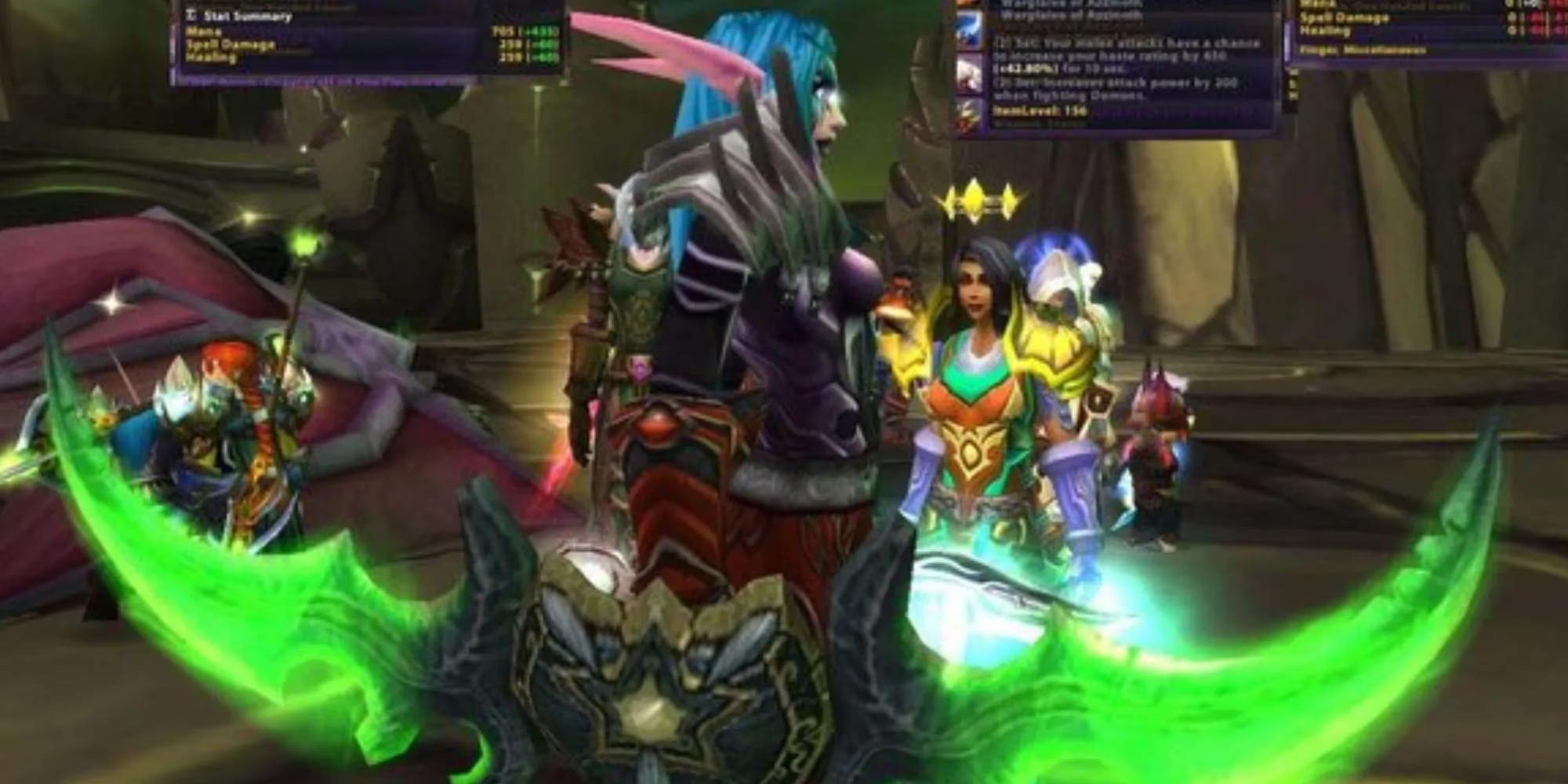
World of Warcraft: the MMORPG standard
World of Warcraft did not invent every idea in the MMORPG genre. It simply combined those ideas so well that it became the benchmark. Raid bosses, shared social spaces, and long-term progression all felt different after WoW. The 2004 game became famous even among people who never touched a keyboard. In 2026, its influence still shows up in online games that want players to build communities, chase gear, and argue about raid schedules. Some games chase trends. WoW became the trend.
Pokemon Red, Blue, and Yellow: handheld magic
Pokemon Red, Blue, and Yellow showed that handheld gaming was not a side attraction. It was a whole world in a pocket. The original games launched in Japan in 1996 and reached other regions in 1998, and the monster-taming genre never looked back. Trading with friends turned a solo adventure into a social ritual. By 2026, Pokemon is a global entertainment giant, but those first cartridges still explain why players love collecting, battling, and sharing the journey.
Mortal Kombat: violence, ratings, and a cultural flashpoint
Mortal Kombat proved that violence could grip an audience, and it also helped push the creation of the ESRB. In the early 1990s, its blood and fatalities sparked a nationwide conversation about what games were and who should play them. The original game looks tame today, but its impact was not tame at all. It forced the industry to grow up in public, and it turned controversy into a kind of marketing that no developer could buy.
Braid: the indie explosion
Braid is the game that made indie development feel like a real movement. Before 2008, independent games existed, but they rarely commanded the spotlight. Braid arrived with clever time mechanics, striking art, and a story that invited interpretation. Players suddenly craved the creativity of smaller teams. In 2026, indie games are a major part of the industry, and Braid deserves a lot of credit for opening that door. It did not just sell copies. It sold possibilities.
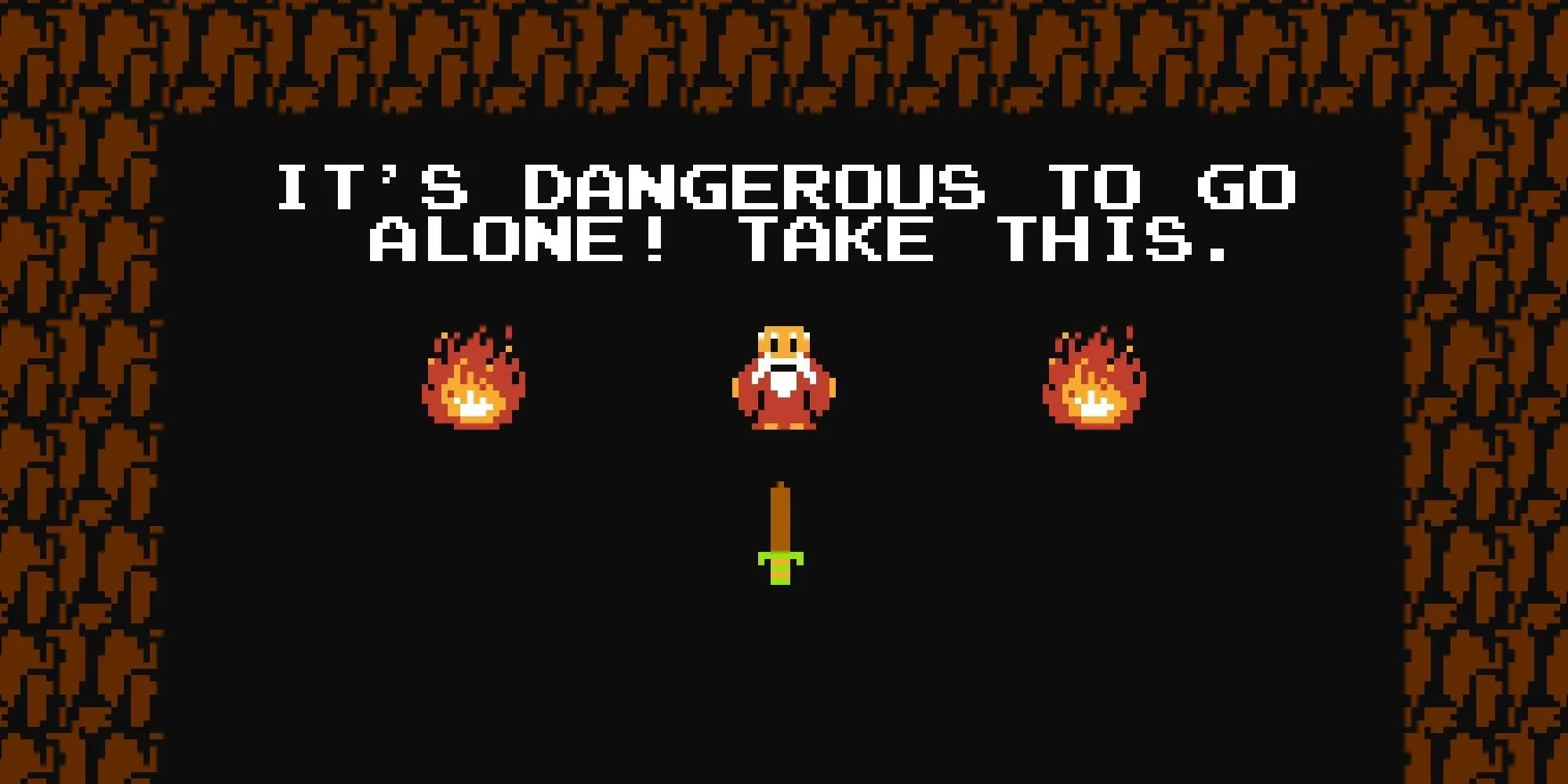
The Legend of Zelda: the open-world blueprint
The original Legend of Zelda gave players a basic story and then trusted them to figure out the rest. That trust became a design principle. Long before open-world became a marketing buzzword, Zelda was showing what exploration could feel like. It influenced fantasy games, RPGs, and even the punishing structure of later titles. Without Zelda, the game industry might still have adventures, but they would probably be far more hand-holding and far less mysterious.
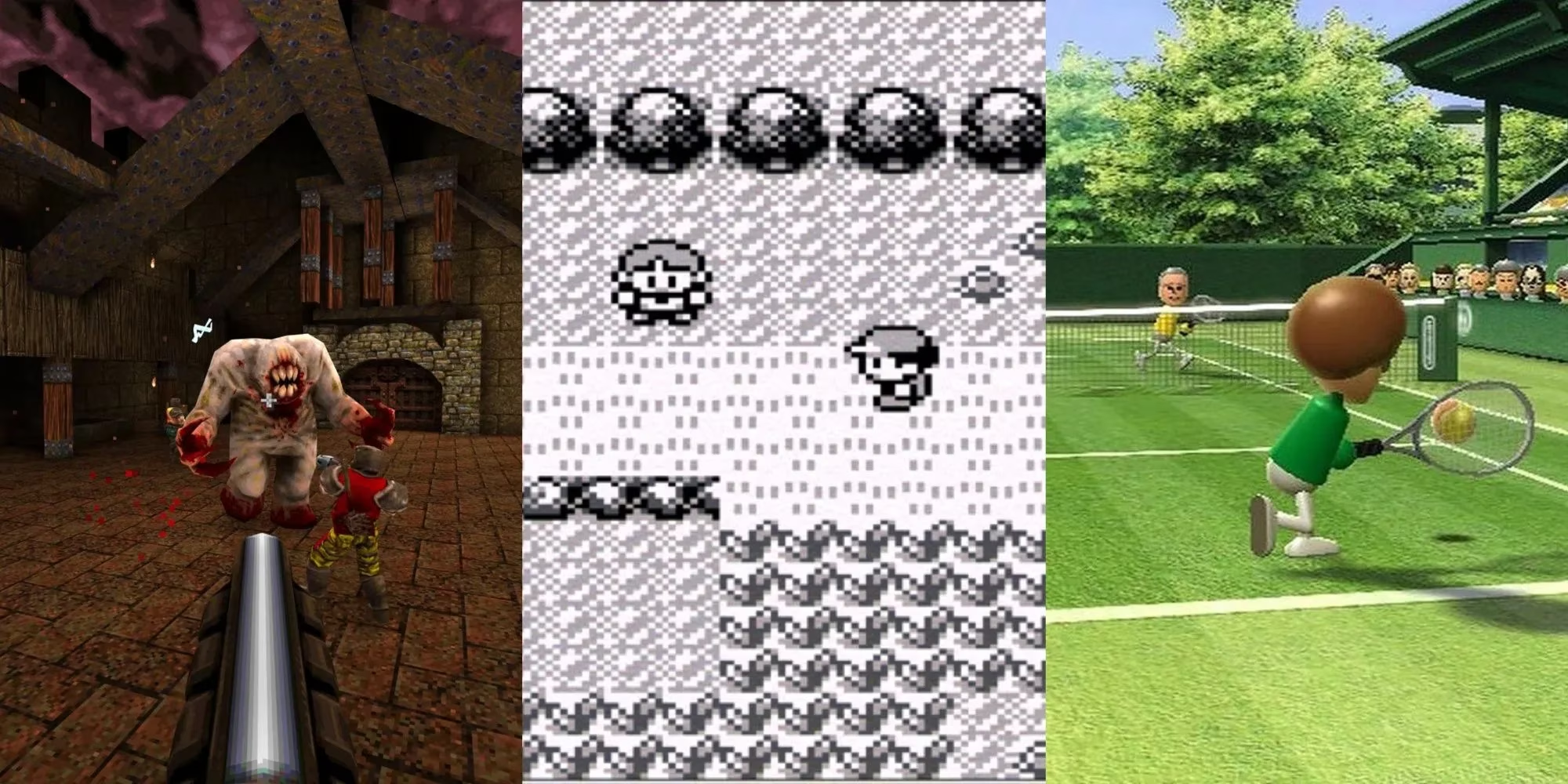
Quake: esports and speedrunning fuel
Quake is the granddaddy of competitive shooting in more ways than one. It helped popularize esports with major events in the 1990s, and it gave speedrunners a playground that still refuses to be tamed. Players learned to move faster, aim harder, and break maps in ways designers never intended. In 2026, esports and speedrunning are global scenes, and Quake is one of the reasons both exist in the shape they do today.
Wii Sports: gaming for everyone
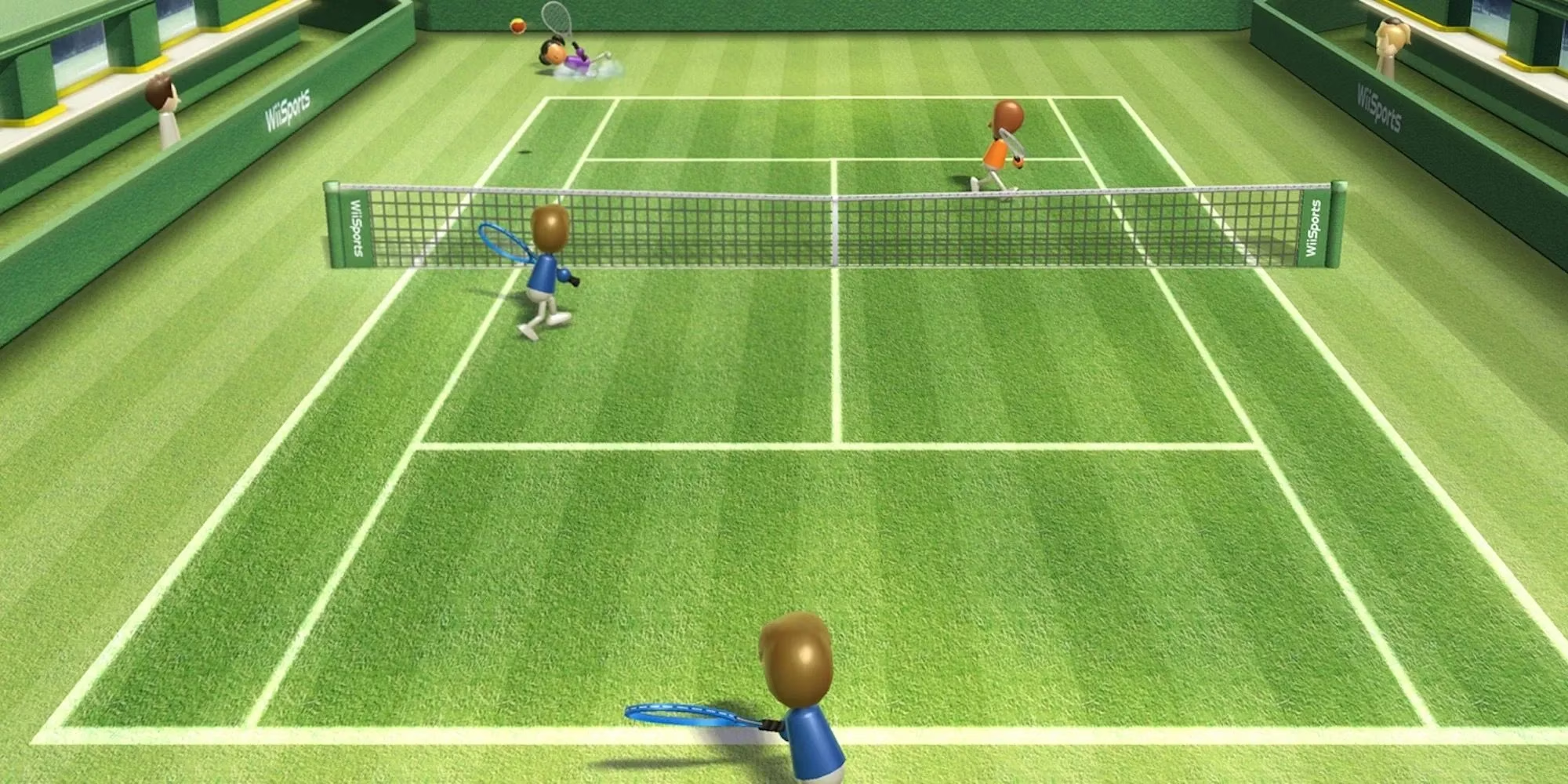
Wii Sports and the Wii itself put a giant spotlight on accessibility. Motion controls were a brave experiment, and the simple fun of bowling or tennis made gaming feel welcoming to families, grandparents, and people who had never held a controller. The game did not just broaden the audience. It changed the conversation. Gaming could be for anyone, and that idea only became more important as the industry grew.
Pong: the first big proof
Pong is easy to laugh at today. Two paddles, one ball, and a score. And yet, that simple game proved home gaming could be a worthwhile pastime. It was a huge hit in the 1970s, and versions of Pong still pop up everywhere. Every home console owes something to those paddles and that ball. Pong did not need a story or a cinematic trailer. It just needed players to care, and they did.

| Game | Big change | 2026 echo |
|---|---|---|
| Minecraft | Player-driven creation | Sandbox and shared-world design |
| Oblivion | Mainstream microtransactions | Paid extras everywhere |
| World of Warcraft | MMORPG standard | Online social progression |
| Pokemon | Handheld social gaming | Global collecting and trading |
| Mortal Kombat | Ratings and controversy | Age ratings and content debate |
| Braid | Indie credibility | Indie games as a major force |
| Zelda | Open exploration | Open-world design language |
| Quake | Esports and speedrunning | Competitive gaming culture |
| Wii Sports | Accessibility | Broader player base |
| Pong | Home gaming proof | The foundation of console play |
Here is the thing: not every change on this list is comfortable. Microtransactions are a headache, and violence debates never really disappear. Still, these games matter because they moved the medium in ways players could feel. Some opened doors. Some broke walls. A few simply handed people a ball and let them discover why games are worth caring about.
This overview is based on reporting from Polygon, whose long-form coverage of game history and industry shifts helps frame why titles like Minecraft, World of Warcraft, and Wii Sports mattered beyond sales alone. Looking at games through that lens makes it easier to see how landmark releases can reshape design trends, audience expectations, and even the broader cultural conversation around what games are supposed to be.