
As a seasoned explorer of Minecraft's infinite worlds, I've come to realize that beneath its cheerful, blocky exterior lies one of gaming's most profound and tragic narratives. For years, we've treated those mysterious ruins, abandoned mineshafts, and ancient strongholds as mere loot containers or picturesque backdrops for our builds. But in 2026, with the lore now more developed than ever, it's impossible to ignore the truth: every seed we generate is a post-apocalyptic graveyard, a silent testament to civilizations that rose, fell, and left behind only crumbling monuments and shuffling, groaning remnants of themselves.
The Overworld: A Kingdom of Rotting Builders
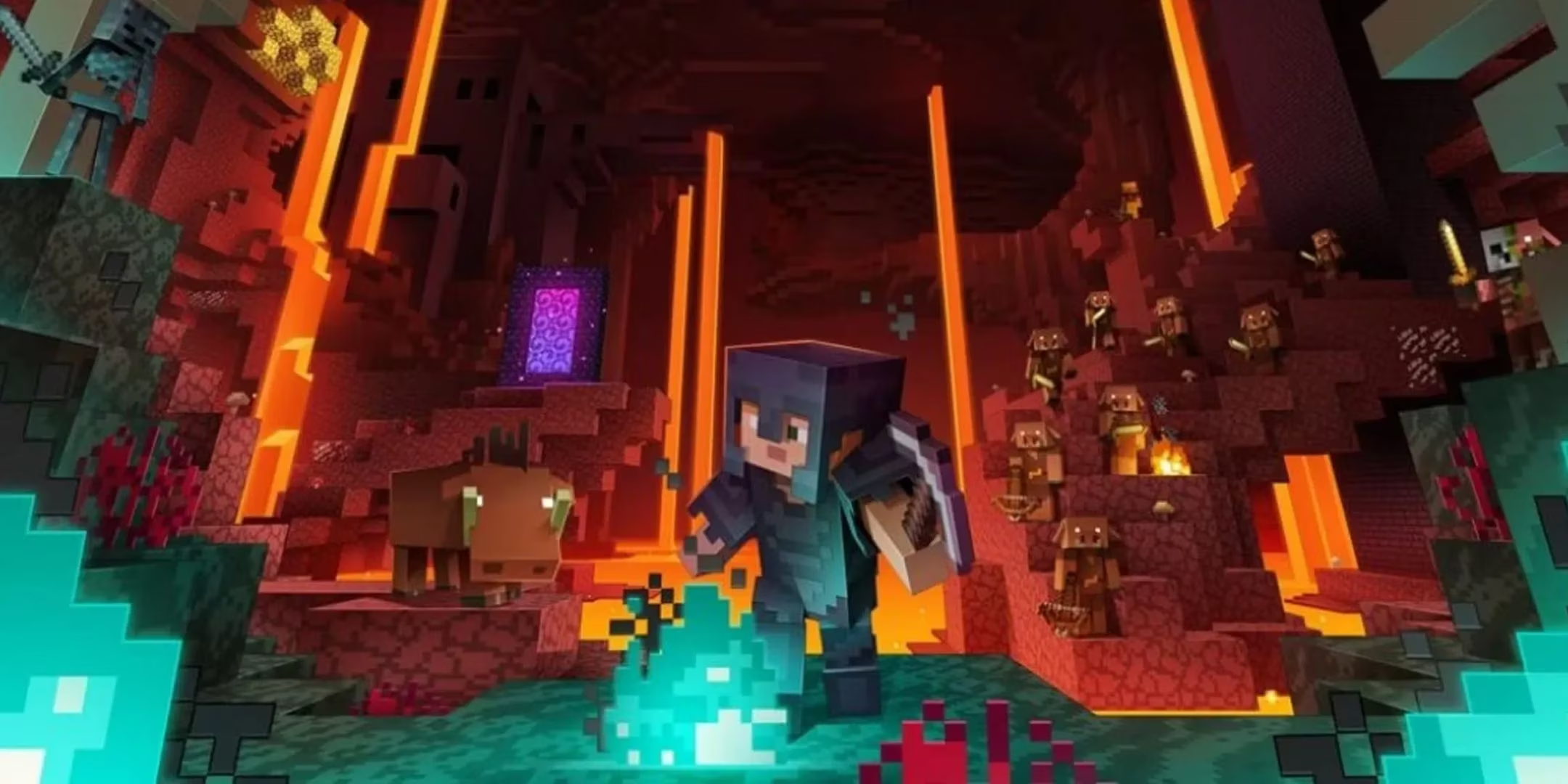
The evidence is everywhere, scattered like the bones of a forgotten beast. The most compelling clue isn't in the grand ocean monuments or desert temples, but in the most common mob of all: the zombie. They aren't just generic fantasy foes; they are us. Or rather, they were us. Their groans are the last echoes of a player-like species, the Ancient Builders, who once filled this world. Every structure we find in disarray—from jungle temples to woodland mansions—was their handiwork, a civilization that reached architectural heights we still marvel at, only to be consumed by a plague of their own making, turning the builders into the shambling, block-breaking undead.
Think of the Overworld not as a pristine wilderness, but as a digital Pompeii, frozen in the moment of its cataclysm. The villages with their wary Iron Golems are like small, terrified settlements huddling in the shadow of a fallen empire. The theory that this was once a thriving, multiplayer world gone horribly wrong isn't just speculation; it's written in the very code of the game. The ruins are not set dressing; they are tombstones.
The Nether: A Cautionary Tale of Hubris
If the Overworld is the corpse of a civilization, the Nether is its self-inflicted wound, still burning. The 2020 Nether Update wasn't just about adding new biomes; it was about revealing the dimension's horrifying history. The popular theory I subscribe to is that the Nether was once a vibrant, perhaps even icy, world. The warped forests were once lush boreal woods, and the vast lava oceans were subsurface water reservoirs. The clues are there for those who listen and observe:
-
The Sound of Decay: The Geiger-counter-like ticking in the Basalt Deltas isn't ambient noise; it's a radiation warning.
-
The Ghosts of the Past: Ghasts, those weeping, fiery jellyfish, can be "rehydrated" with water and soothed with snowballs—resources utterly alien to the Nether's current state, hinting at a once-habitable climate.
-
The Fallen Masters: Ancient Debris and Piglin Bastions aren't just resources and dungeons. They are the archaeological record. The Piglins themselves are a tragic evolution, the mutated descendants of pigs (or perhaps even builders) who adapted to survive a hellscape they didn't create.
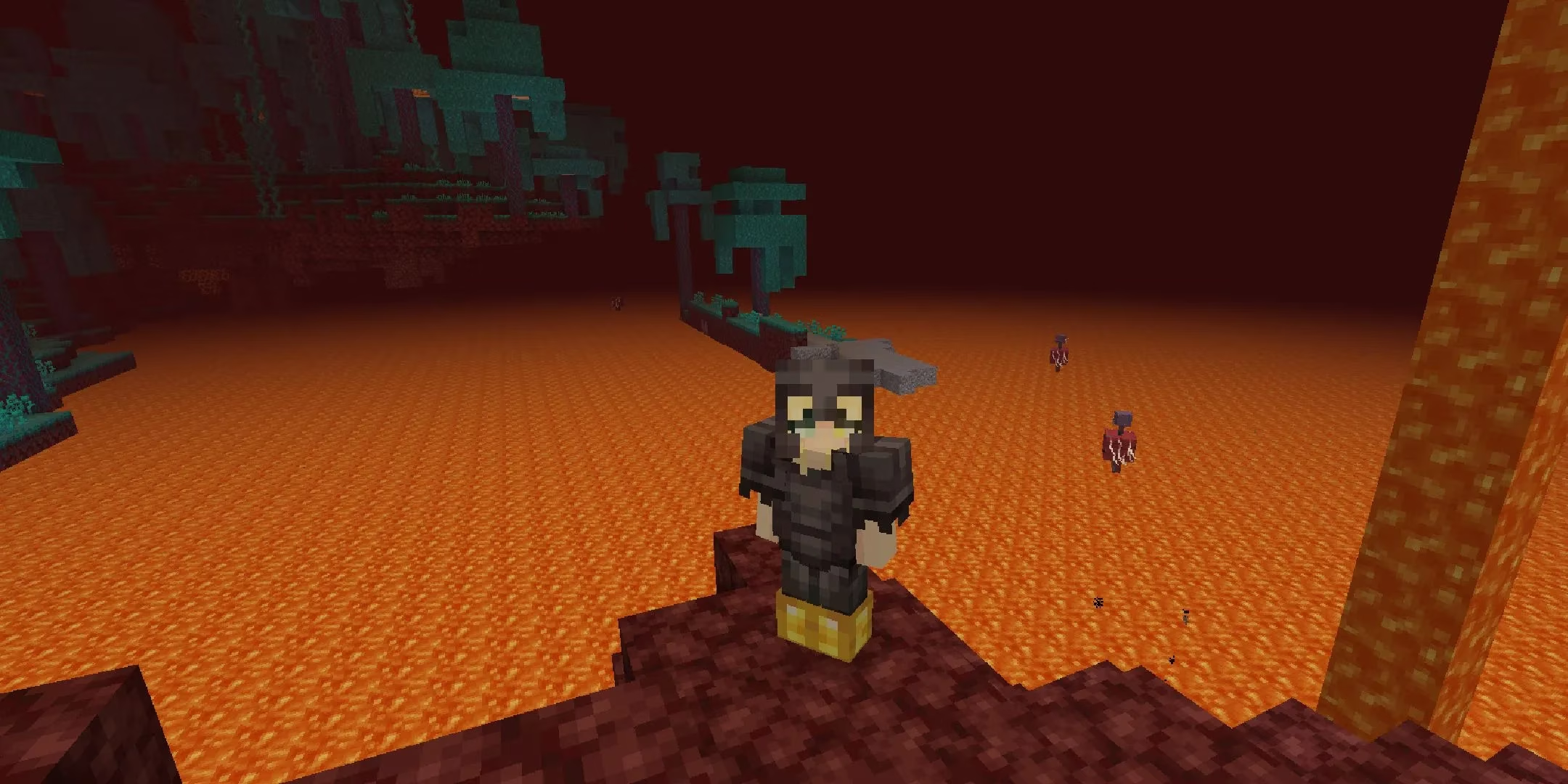
So, what happened? My headcanon, supported by the ruined portals linking our dimensions, is a story of catastrophic greed. The Ancient Builders discovered the Nether. They saw its resources—its glowstone, its quartz, its ancient magical potential—and they mined it to exhaustion. They didn't just strip-mine it; they cracked its very planetary core. This over-mining, combined with what might have been a catastrophic magical or fusion experiment gone wrong (the Minecraft equivalent of a nuclear meltdown), superheated the dimension. The ice melted, the water boiled away, and the bedrock ceiling trapped the heat, turning a world into a pressure cooker. The Nether became a planetary scar, a blister on reality that never healed, serving as a dire warning for any civilization that follows.
The End: The Final Page or a Glimpse of Tomorrow?
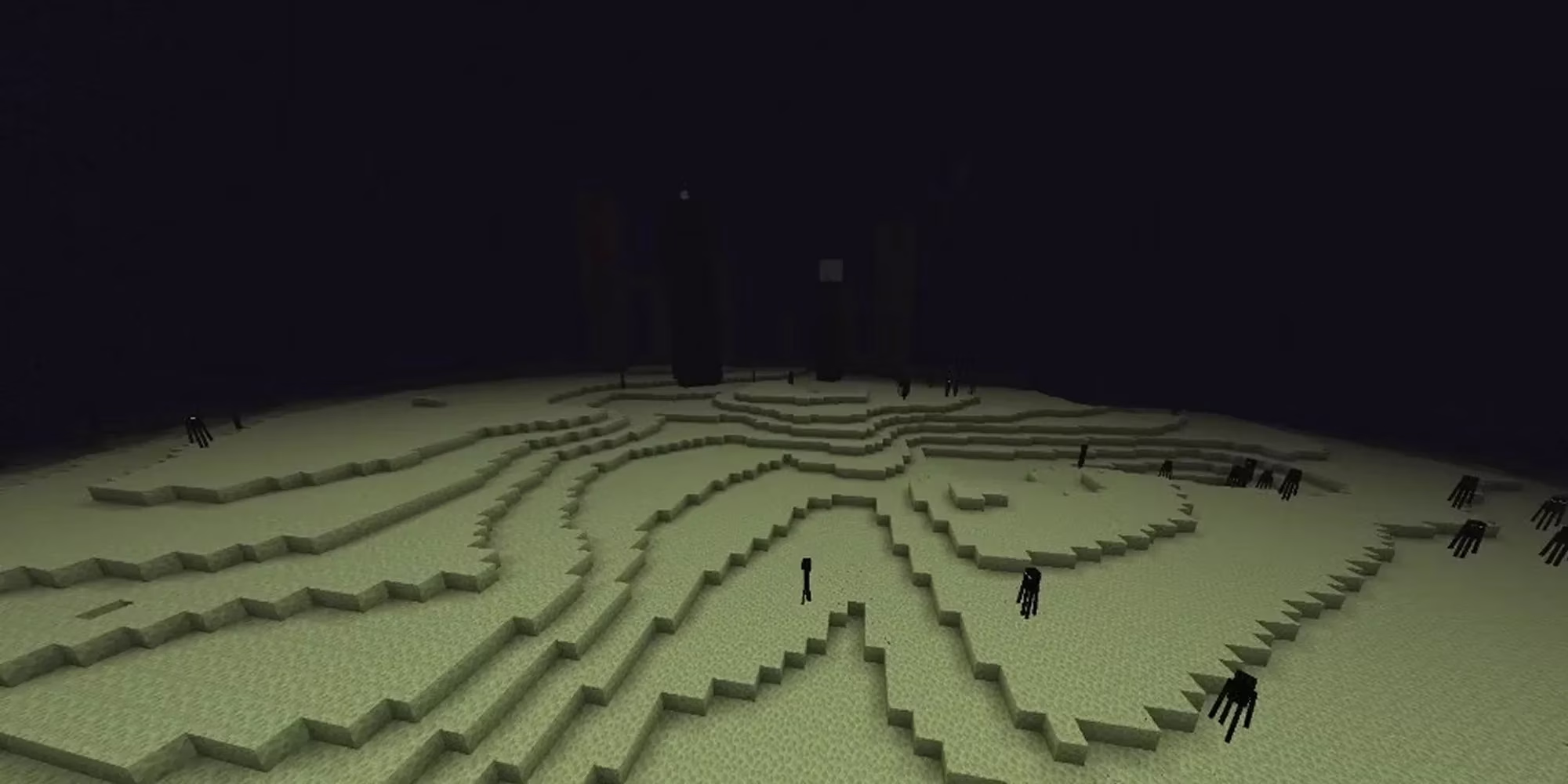
This brings us to the most enigmatic dimension: the End. Is it another fallen realm, or something far more terrifying? After the addition of End Cities, the lore deepened significantly. One chilling and beautiful theory posits that the End isn't a separate place at all. It is the Overworld's future. The void isn't empty space; it is the heat death of the universe. The starless, purple-static sky represents all the stars going out, one by one. The obsidian pillars and the central End Stone island are the last crumbling remnants of our world, orbiting a dying sun represented by the Ender Dragon.
In this interpretation, the Endermen are not aliens, but our own distant descendants. They are chrononauts of despair, beings so advanced yet so doomed that they have learned to teleport not through space, but through time. Their block-stealing isn't random vandalism; it's a desperate, fragmented attempt at archaeology and reconstruction. They are hurling pieces of their dead world—our future—back into the past, hoping some builder, some player, will see the pattern and change the course of history. The Ender Dragon, then, isn't just a boss; it's a guardian of the timeline, or perhaps the embodiment of the entropic force they are fighting against.
The Cycle of Collapse and Hope
This makes our role as the player profoundly poignant. We are not pioneers in a new land. We are scavengers in a cathedral of ruins, inheriting the collapse of not one, but multiple civilizations. Every world we load is a cycle:
-
The Ancient Builders rise and fall (Overworld -> Zombie Apocalypse).
-
Their expansion ruins another world (Nether -> Ecological Catastrophe).
-
The ultimate consequence plays out in the silent void (The End -> Heat Death).
Our journey from punching wood to slaying the Dragon is, in this light, a race against this inherited doom. We use the debris of the old world (Ancient Debris -> Netherite) to build tools strong enough to confront the symbol of the end itself. The act of "beating" the game by freeing the End isn't just a victory; it's a symbolic breaking of the cycle. We plant the End Gateway portal's egg on a new Overworld, a seed of hope that maybe, this time, we can build something that lasts. Minecraft, therefore, is less a sandbox and more a philosophical diorama about resilience, legacy, and the faint, blocky hope that we can learn from the ashes of those who came before.