
The iconic, and often infamous, Minecraft Mob Vote has finally been put out to pasture after a nearly seven-year run. Mojang, the game's creative overlord, recently pulled back the curtain on a major shift in how it plans to update its blocky universe, and part of that grand redesign involves saying a not-so-fond farewell to the annual creature popularity contest. This move, framed as a way to better listen to players, might seem a bit ironic at first glance—wasn't the vote all about letting fans choose? But, as Mojang would tell you, the old system had more drama than a creeper in a china shop, and it was time for a change.
Why the Mob Vote Got the Axe
Let's be real, the Mob Vote was a bit of a messy beast. Picture this: every year, Mojang would trot out three mysterious mob concepts, give them some fluffy descriptions, and ask millions of players to pick just one. The problem? It felt like being asked to choose a birthday present while blindfolded. You never quite knew what you were going to get. Senior game designer Cory Scheviak hit the nail on the head when he said the vote made it seem like "we have all three ready to go already." This lack of transparency was a recipe for trouble.
The community backlash was almost a guaranteed event, more predictable than sunrise. The very first vote unleashed the Phantom, a mob that many players love to hate for its pesky, sleep-depriving ways. Later votes led to letdowns like the Glow Squid (pretty, but... what does it do?) and the Sniffer (ancient and adorable, yet its purpose left some scratching their heads). The whole process created a weird dynamic where fans were arguing over vague promises, and Mojang couldn't provide clear answers because, well, the ideas were barely off the drawing board.
The 2023 vote, featuring the now-beloved Armadillo, was supposed to fix this. Mojang gave each mob a clear job description! But guess what? The community still found things to debate, and that debate boiled over into outright anger. A vocal group called for a boycott, arguing that a company of Mojang's size should just give players all three mobs. This whole saga proved that the vote was a broken telephone game between developers and players, with neither side having the full picture.
The New Blueprint: Smaller, Smarter, and More Often
So, what's replacing the chaotic vote? Mojang is flipping the script with a shiny new update strategy. Gone are the days of waiting a whole year for one massive, monolithic update. The new plan is all about multiple smaller updates sprinkled throughout the year. Think of it as getting frequent care packages instead of one giant, overwhelming holiday gift. Alongside this, Minecraft Live—the annual showcase—will now happen twice a year, spreading the hype more evenly.
This isn't just a scheduling change; it's a philosophical one. The goal is to create a continuous, year-round conversation with the community. Instead of a single, high-pressure vote, feedback can be incorporated steadily and meaningfully as these smaller updates take shape.
The Armadillo: Poster Child for the New Way
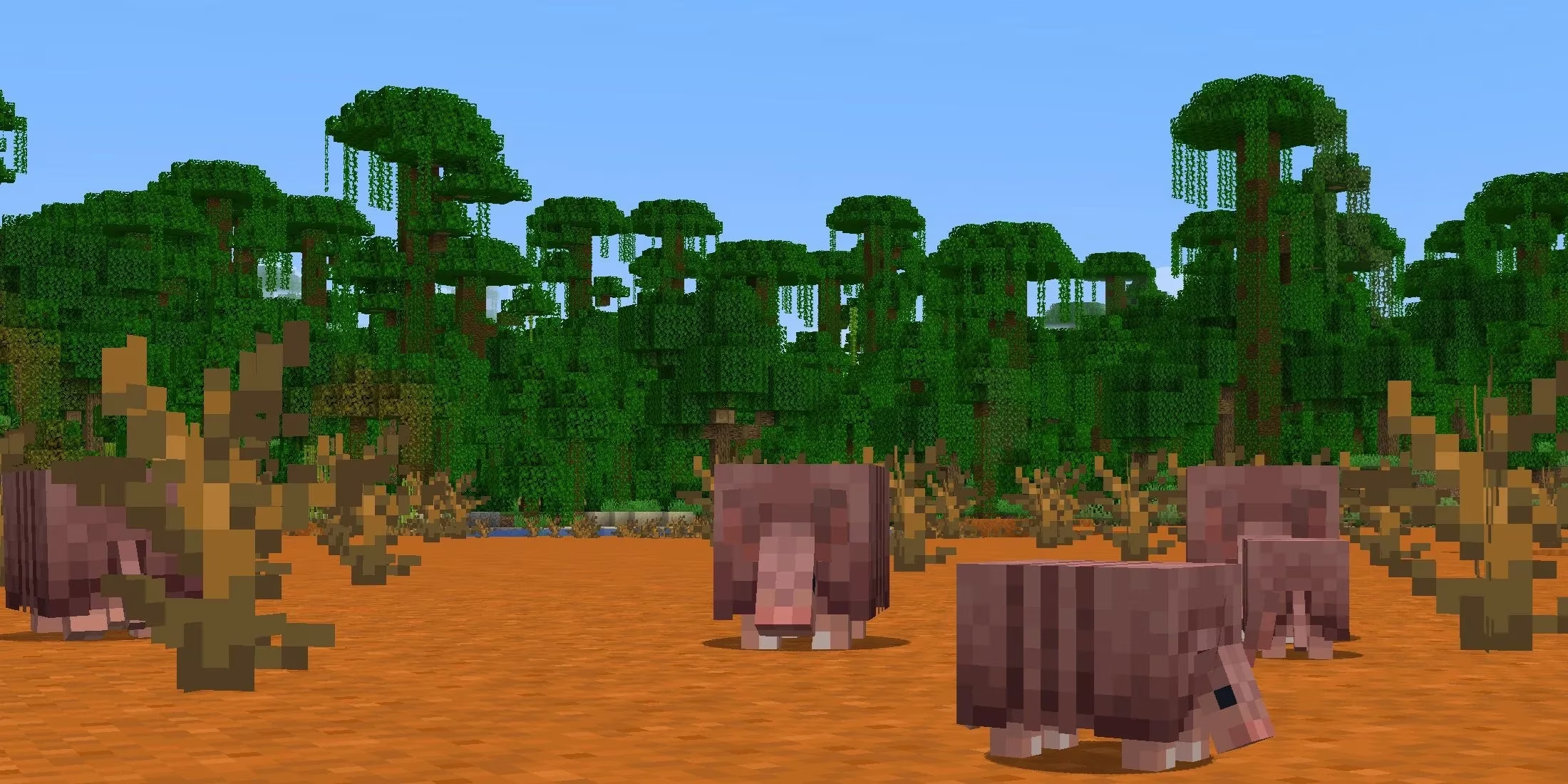
If you need proof that this new system works, look no further than the Armadillo itself. This critter didn't debut as part of a huge numbered update; it arrived early in the cozy, focused 1.20.5 Armored Paws update. Because it was part of a smaller package, Mojang could really take its time with it. They released snapshots, listened to player feedback, and iterated on the design. Remember the big debate about what its scutes would be used for? That was worked out with the community, not in spite of it.
| Old System (Mob Vote) | New System (Smaller Updates) |
|---|---|
| One big, annual decision | Continuous, incremental changes |
| Vague mob concepts | Fully realized features in development |
| Community division & backlash | Ongoing collaboration & refinement |
| "Winner takes all" mentality | More room for multiple ideas to shine |
Mojang's own announcement article pointed to the Armadillo's development as a perfect example of how they want to work from now on. The little armored guy's journey from concept to beloved game feature shows that the best way to involve the community isn't through a gladiatorial vote, but through an open, ongoing workshop where suggestions can actually be heard and implemented. It's a win-win.
Looking Ahead to 2026 and Beyond
As we stand in 2026, the retirement of the Mob Vote feels less like an ending and more like a growing-up moment for Minecraft. The game has been shaped immensely by its fans—from hired developers who started as players to countless implemented suggestions. Relying on a single, controversial event to gauge interest was, frankly, a bit old-fashioned.
The future is looking bright and more collaborative. With smaller updates, players can expect:
-
🛠️ More opportunities to give feedback on features while they're still in development.
-
🎉 More frequent reasons to get excited with fresh content drops throughout the year.
-
🤝 A stronger sense of partnership with the developers, moving beyond "us vs. them" voting drama.
So, pour one out for the Mob Vote. It had its moments, but it was always a bit of a troublemaker. In its place, a new, more mature system is being built—one where the community's voice isn't just heard once a year in a shout, but is woven into the very fabric of the game's evolution, one thoughtful update at a time. The blocky world is changing, and for the players, that's probably a very good thing.