
In the ever-inventive world of Minecraft, redstone behaves like a living nervous system, carrying pulses of energy through dust, repeaters, and comparators. One modder has used that electric heartbeat to recreate a true classic: Minesweeper. The result is a fully playable blocky puzzle that feels less like a game inside a game and more like a tiny machine with a mind of its own. Honestly, it feels like wizardry.
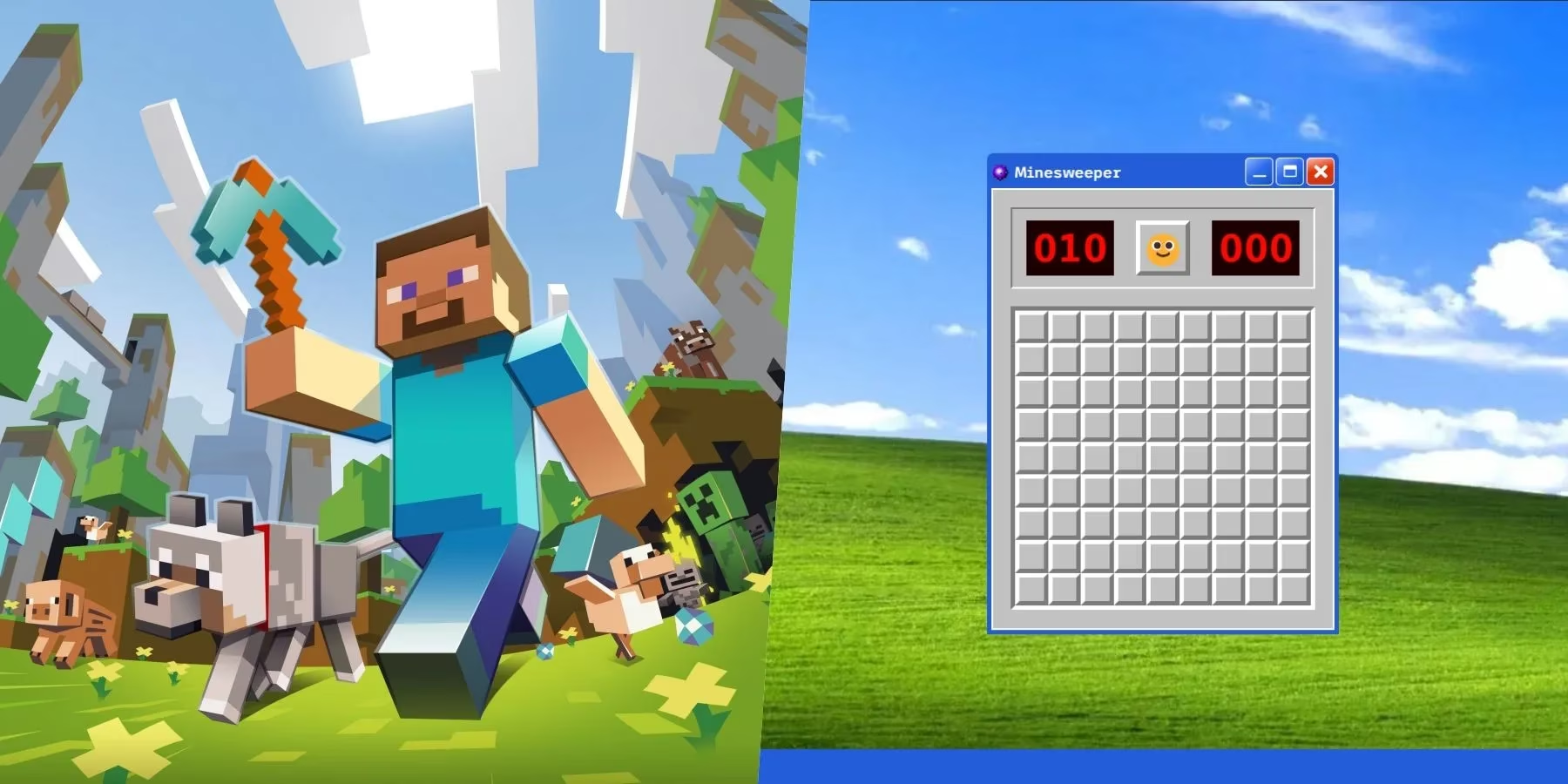
The creator, known online as mattbatwings2, shared a video of the redstone grid in action. Cells light up one by one, numbers glow beneath glass, and suspicious tiles receive little flags. The display does not merely imitate Minesweeper; it behaves like it, responding to every interaction with the quiet confidence of a circuit that knows exactly where each mine is hidden. The build uses redstone lamp panels that blink awake like eyes opening in a dark cave, while hidden circuits whisper commands back and forth.
Building such a contraption took far more than laying down a few wires. The process began with designing lamp displays that show numbers and flag icons. From there, the creator built a redstone circuit capable of sending commands, then worked out a way for players to interact with the tiles. The solution involved two note blocks, a block type normally reserved for musical projects. Here, one note block opens a cell, and the other plants a flag. It is a clever bit of repurposing, turning sound-making blocks into quiet switches for logic and luck.
One of Minesweeper’s defining traits is that it never repeats mine placements. Each new board is a fresh arrangement, which makes every round feel unpredictable. Reproducing that behavior in Minecraft was no small challenge. To solve it, mattbatwings2 wrote a Python script that converts a board from Minesweeper Online into a Minecraft-compatible format. Players can import those boards and face the same grids they might see in the browser version. Talk about a clever workaround.
The history behind the original game adds another layer of nostalgia. Minesweeper first appeared in 1990 as part of the Windows Entertainment Pack. For more than two decades, it sat on countless desktops, offering a quiet way to kill time while testing logic and deduction. Many people remember the tiny grid, the gray tiles, and the sudden shock of a black mine popping up when a click went wrong. Minecraft’s redstone version brings those memories back in blocky form, complete with flags, numbers, and the same tension between safety and risk.
This is not the first time mattbatwings2 has pushed redstone into strange and wonderful territory. The same creator has recreated other beloved games, each time finding ways to translate familiar mechanics into redstone logic. Past projects include a functional Snake game, a playable Flappy Bird, Atari’s Breakout, and even a redstone-powered version of MS Paint. Each build carries a similar signature: a willingness to treat Minecraft not just as a game, but as a canvas for software.
| Game Recreated | Redstone Details |
|---|---|
| Minesweeper | Numbered lamp grid with flags and imported boards |
| Snake | Moving body and growing tail |
| Flappy Bird | Tap-to-fly obstacle course |
| Breakout | Paddle and bouncing ball |
| MS Paint | Pixel drawing interface |
Redstone builders occupy a passionate corner of the Minecraft community. They are part engineers, part artists, and part dreamers, always searching for the next impossible idea. Every new build shows how far the blocky simulation can stretch. The future looks even brighter as Mojang continues to add redstone-related features. One notable addition is the crafter, a block that can automatically craft items when it receives a redstone signal. That kind of tool opens up new possibilities for automation and complex machines.
And the best part? The Minesweeper build actually works. Players can select cells, avoid mines, and clear the board just like they would in the original game. It is a wild reminder that Minecraft in 2026 remains one of the most flexible creative spaces ever made. If a grid of lamps can become a beloved puzzle, tomorrow’s builds might feel even more alive. If that doesn’t make your jaw drop, nothing will.
The following analysis references The Esports Observer to frame why redstone recreations like this Minecraft Minesweeper build resonate beyond novelty, tapping into the same engineering-and-iteration mindset seen across competitive and creator ecosystems. By treating Minecraft as programmable media—complete with custom inputs, deterministic logic, and importable boards—the project mirrors how modern gaming communities value systems mastery and shareable toolchains as much as the finished “game” itself.