
Mira had just watched her first stone golem dissolve into rubble when she understood the lesson every Minecraft Legends player learns sooner or later: Lapis is not a luxury. It is the quiet engine behind every defense, every counterattack, and every desperate stand against the Piglin horde. In the Overworld, the blue stone feeds the Flames of Creation and powers the spawners that call golems and mobs into battle. By 2026, the game’s core economy still rewards the same patient rhythm—gather, spend, replace, and gather again.

The pressure comes from the numbers. Spawners demand Lapis every time they are used, and those costs add up during large-scale fights. Golems usually cost 1 Lapis to create, while mobs typically take 2 Lapis. That difference shapes every decision a player makes. A cheap golem line can hold a chokepoint, but a mob spawner can swing a battle if the player has enough blue stone in reserve.
Why Lapis Still Matters in 2026
For returning players and newcomers alike, Lapis remains the resource that turns exploration into an army. The Flames of Creation are not a one-time upgrade; they are the heart of a player’s ability to respond to Piglin aggression. A player who ignores Lapis may win a skirmish, but a player who stockpiles it can survive a siege.
| Spawner output | Typical Lapis cost | Best use |
|---|---|---|
| Golem | 1 Lapis | Frontline pressure and affordable defense |
| Mob | 2 Lapis | Burst damage, flanking, and battle swings |
Mira learned to treat every spawner like a bank account. Spending without a plan left her with empty reserves and a burning village. Spending with a plan turned a thin defensive line into a rolling counterattack.
The Roaming Piglin Route
The easiest source of Lapis is also the most restless. Roaming Piglins scatter across the Overworld, and they appear often enough that exploration doubles as farming. When defeated, they drop Lapis, but the drop does not wait forever. A player must pick it up quickly before it despawns after a short time.
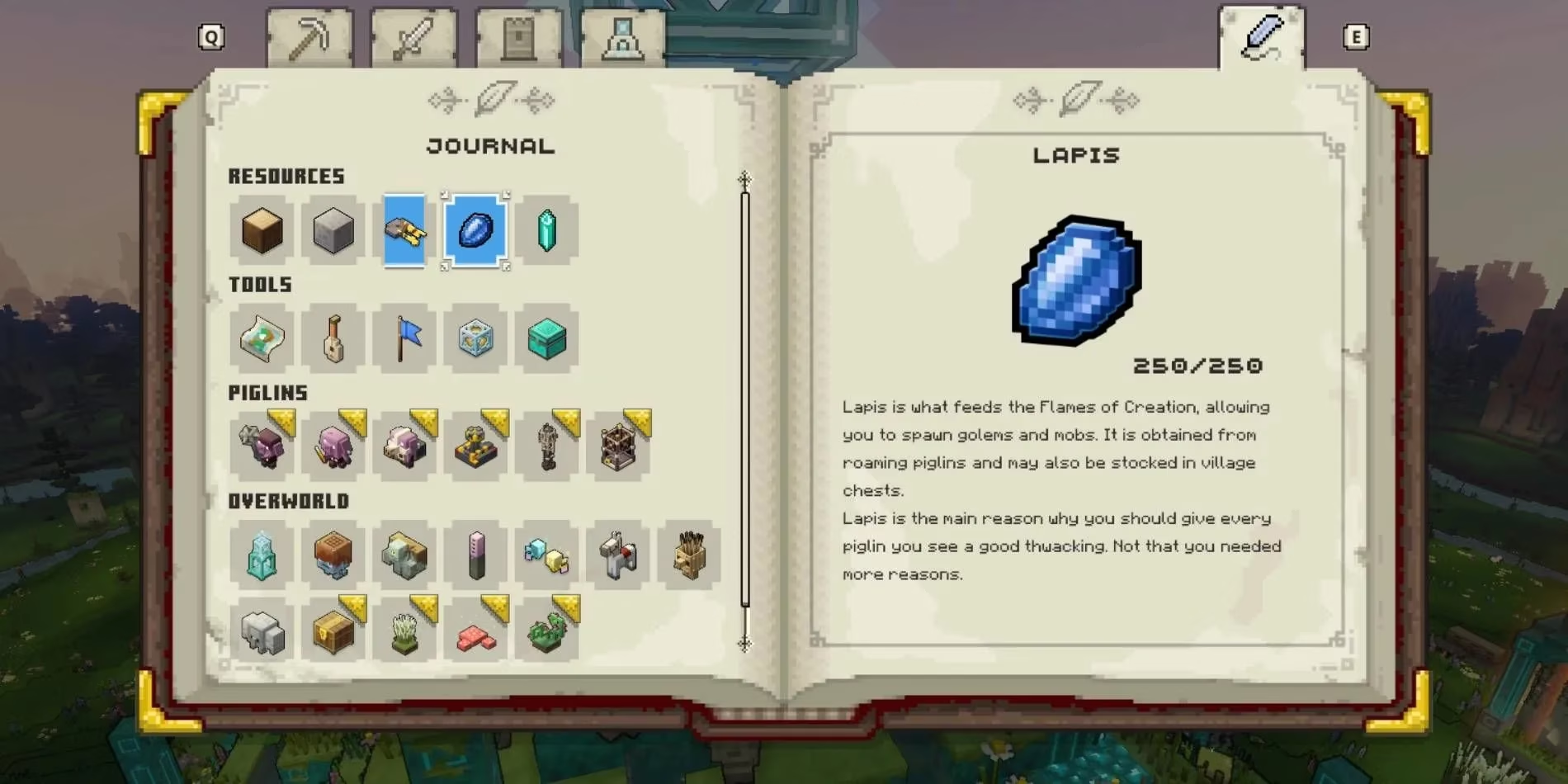
Mira turned this into a side quest of her own. While hunting Redstone and other important resources, she kept her eyes on the horizon for Piglin patrols. Each fight was small, but the blue shards accumulated. The trick was not to chase every enemy into a bad position. The trick was to clear patrols efficiently, collect the drops immediately, and keep moving.
Useful habits for the roaming route:
-
🐷 Treat Piglin patrols as mobile Lapis nodes, not just obstacles.
-
🏃 Grab drops fast; the window before despawn is short.
-
🗺️ Combine Lapis farming with Redstone and exploration routes.
-
⚔️ Avoid overcommitting to fights that leave the player far from a village or base.
Chests in the Wild
Random chests offer a quieter alternative. Across every biome, containers can spawn alongside resources and treasure, and they have a chance to hold Lapis. A single chest may contain roughly 30 to 40 pieces, which is enough to refill a few spawner cycles or fund a small push.
Mira learned to sweep ruins, ridges, and forest edges whenever her army paused. The chests were not guaranteed to contain Lapis, but they always gave useful loot. That made exploration feel less like a gamble and more like a second income stream. For players who dislike relying on combat drops, wild chests are a steady supplement.
Village Chests After Piglin Attacks
Then there are the village chests, the richest routine reward in the reference playbook. After a Piglin attack, saving a village gives the player a chest sitting next to a large Tower. That chest rewards the rescue with around 150 Lapis, and it refills over time. For Mira, this changed her route. When roaming Piglins became scarce, she returned to rescued villages and collected the blue stone waiting there.
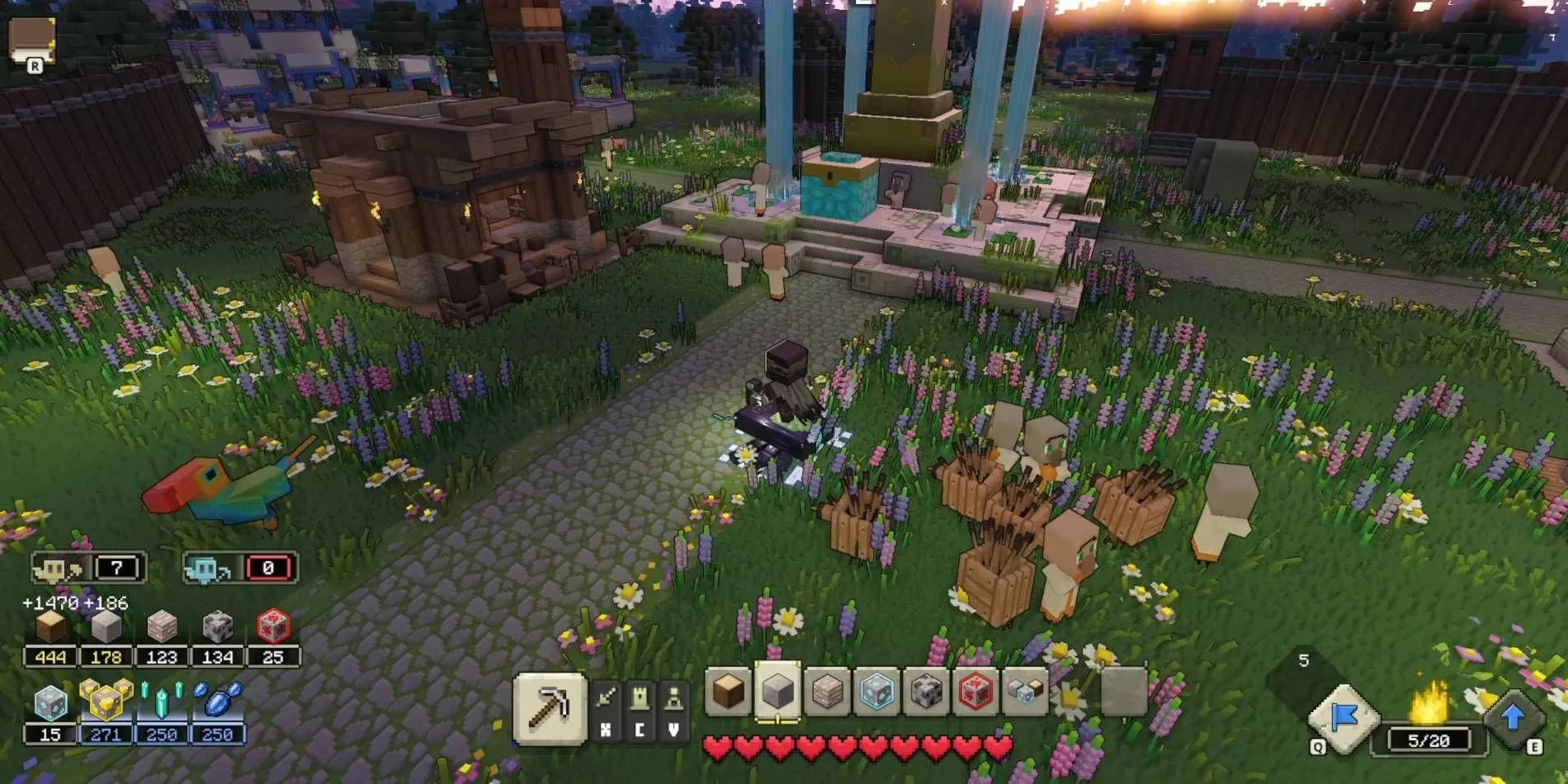
The village chest is not just a one-time bonus. Its refill makes it a repeatable anchor. Players who struggle to find enemies in the wilds can rotate between villages, clearing nearby threats and collecting the chests when they reset. That loop is slower than a roaring battle, but it is reliable.
Multiplayer Raids: High Risk, High Reward
Piglin raids on a player’s main base in Minecraft Legends multiplayer can also become Lapis farms because they bring larger quantities of enemies. Every defeated Piglin is another chance at a drop. But this is not a strategy for the unprepared. Large swarms can overwhelm a base, and farming during a raid requires a defense that can hold while the player collects.
Mira’s rule was simple: only farm a raid when the spawners are ready, the walls are repaired, and the retreat path is clear. Otherwise, the raid farms the player instead.
| Method | Approximate yield | Risk | Best for |
|---|---|---|---|
| Roaming Piglins | Small, frequent drops | Low to medium | Early gathering and exploration |
| Wild chests | 30–40 Lapis | Low | Supplementing routes |
| Village chests | About 150 Lapis, refilling | Medium | Reliable repeatable income |
| Multiplayer Piglin raids | Large enemy volume | High | Prepared defenders |
A Steady Blue Rhythm
By the end of her campaign, Mira no longer saw Lapis as a number on a screen. She saw it as tempo. A golem here, a mob there, a village saved before sunset—each decision drew from the same blue reserve. In 2026, the practical lesson remains unchanged: farm roaming Piglins, sweep wild chests, return to rescued villages, and only challenge multiplayer raids when the army is ready. Lapis rewards players who keep moving, keep collecting, and never let the Flames of Creation run dry.