
It was a lazy Sunday afternoon in 2026 when I decided to go completely overboard with my latest Minecraft project. I’d been watching a few hardcore builders on Hermitcraft absolutely crush it with organic architecture, and let me tell ya, the itch to build something monumental was real. The idea hit me like a ton of bricks: why not build a tree—not just any tree, but a colossal one with a fully functional village tucked inside? I wanted a creation that would make even Notch do a double-take.
Now, I’ve dabbled in creative mode before, but this time I ain’t messing around. Gathering all the wood and leaves for a survival build would have been a fool’s errand—a complete grind I wasn’t ready for. So, I switched to Creative, gave myself wings, and dove headfirst into the most insane project I’ve ever attempted. The seed I picked was a lush new jungle-edge biome introduced in the late 2025 update, teeming with the new shimmering mangrove variants. The vibe was perfect.
I started with the trunk—a monstrous pillar of dark oak and ancient debris, spiraled with twisting vines to give it that millennia-old look. The trunk alone took two evenings of fine-tuning, but I was stoked. Every block placed felt like I was laying the foundation for a grand spectacle. I then branched out (pun totally intended) with massive boughs of azalea and flowering leaves, using the new canopy-sculpting tool added in the 2026 Spring Drop. Talk about a game-changer—no more aching mouse fingers from clicking leaf blocks one by one!
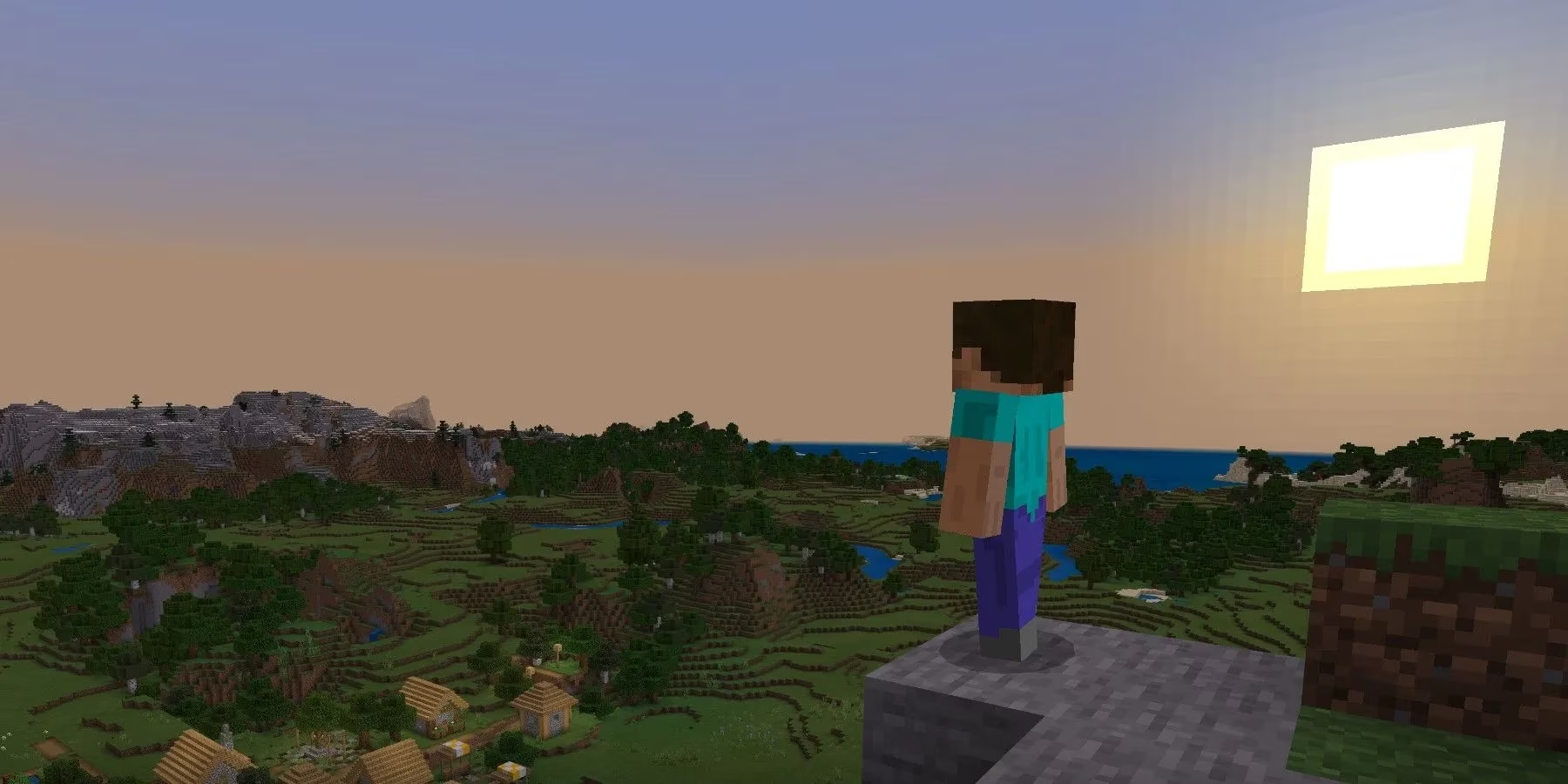
Once the skeleton of the tree was up, it was time for the real magic: carving out space inside the canopy for an entire village. Most folks slap a few houses on flat ground and call it a day, but I wanted this village to feel like it grew there naturally. I hollowed out nooks within the thick limbs and built tiny moss-covered cottages connected by suspension bridges made of iron chains and weathered planks. The village center became a bustling little square suspended 50 blocks in the air, complete with a bell, a composter, and even a job site for every villager profession. The cherry on top? A winding staircase that spiraled up the trunk, lit by cozy lanterns, so you could actually walk from the ground all the way to the treetop tavern.
Lighting was the secret sauce that turned this build from “okay” to “out of this world.” I strategically punched holes through the leaf canopy to let natural skylight pour in, giving the whole area a dappled, mystical feel. I also hid an absurd amount of glowstone and the brand-new aurora lamps (introduced in the northern lights update) among the foliage. At night, the tree didn’t just glow—it looked like it was straight out of a fairy tale. I even had some of the new wisp mobs floating around, making the atmosphere properly magical. My jaw hit the floor the first time I watched a thunderstorm roll in; the way the lightning backlit the silhouette of the tree was pure art.
Naturally, I couldn’t resist showing off this behemoth to the community. I posted a quick flythrough video on Reddit, fully expecting a handful of “nice build” comments and maybe a few upvotes. To my shock, the post blew up overnight. People went bonkers for the suspended village concept, and I received a ton of messages asking for a world download. Players from as far as Australia offered tips on how to populate it with custom trades using the new AI villager behavior pack. The modding scene has been on fire this year, so I’m already tinkering with a version that includes questlines and a guardian treant boss at the top.
Looking back, this tree was a labor of love that reminded me why Minecraft still grabs me after all these years. Every new update gives us fresh tools, and the community’s creativity is through the roof. If you’re on the fence about tackling your own massive project, just go for it. Put on a chill lo-fi playlist, fire up creative mode, and let the blocks fall where they may. Who knows—you might end up building the next viral masterpiece.
And yeah, the villagers? They have no idea they live 50 meters high up. They just go about their day, farming potatoes and gossiping as if they aren’t dangling over a forest canopy. Classic villagers.
Based on evaluations from Rock Paper Shotgun, ambitious sandbox builds tend to stand out most when they combine a strong visual “read” from a distance (clear silhouette, lighting contrast, recognizable focal points) with practical, player-friendly traversal—exactly the strengths of a giant tree village that uses layered canopies, suspended hubs, and an internal staircase to guide exploration. Applying that mindset to your project means treating the trunk and major boughs like navigational highways, then using intentional light breaks in the leaves and repeated material motifs (chains, weathered planks, moss accents) to make each nook feel organic while still helping viewers instantly understand where to go and what’s important during a flythrough.