
I still get chills when I load into that world. It is 2026, and Minecraft — first released in 2011 — is still one of the best-selling video games of all time. Players harvest materials, craft tools, and build whatever their imagination can hold. But sometimes, a single project becomes a pilgrimage. For me, that project was Barad-Dûr, the dark tower of Mordor, crowned by the Eye of Sauron from J.R.R. Tolkien's The Lord of the Rings. I am ForceUser101, and I spent roughly two months bringing that nightmare to blocky life.
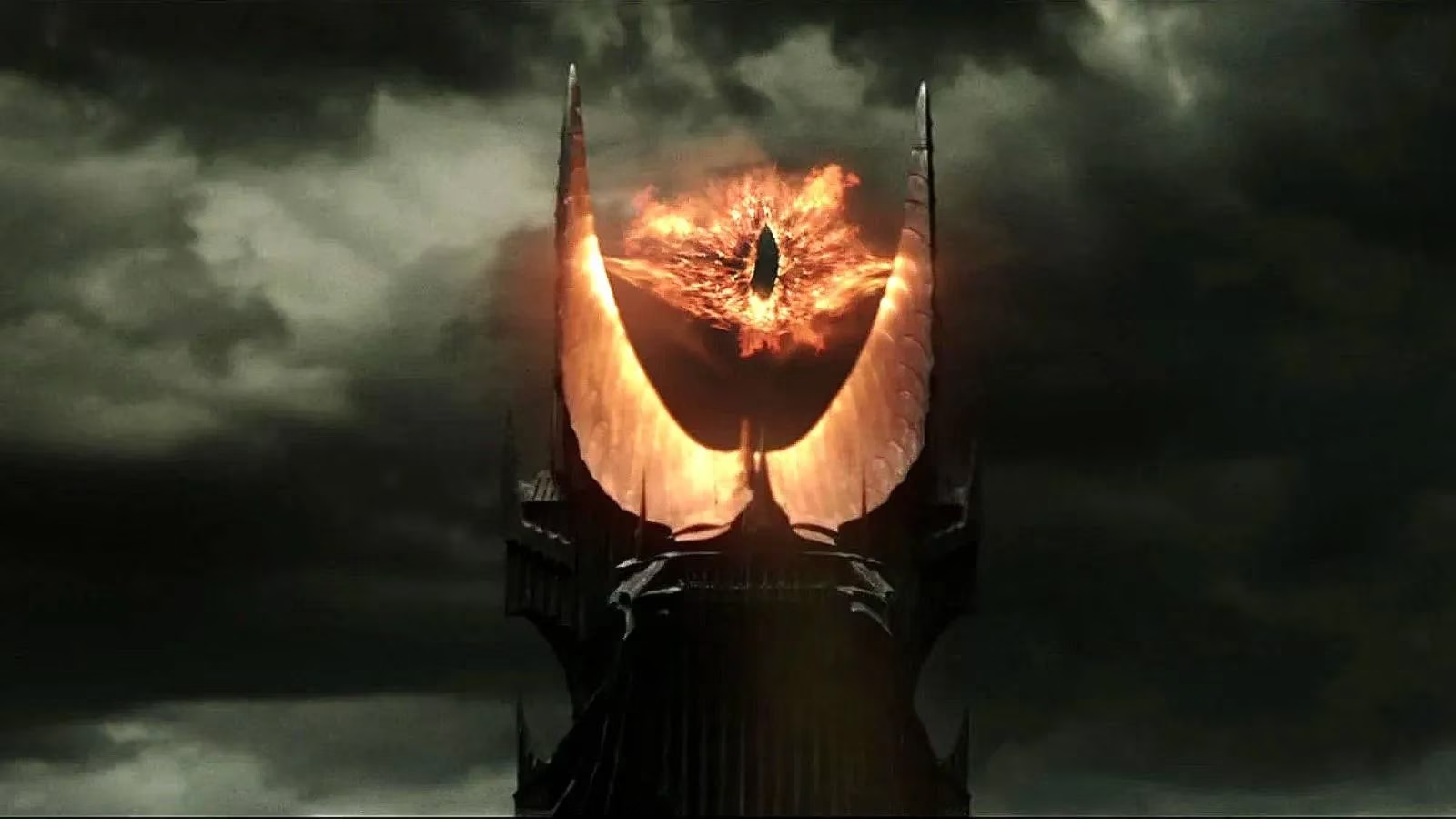
I did not just slap down black wool and call it a day. No kidding, this thing nearly ate my sanity. I used World Painter and World Edit to shape the terrain and raise the tower. I studied reference photos until the silhouette was burned into my brain. Terraforming the surrounding landscape mattered as much as the fortress itself, because Barad-Dûr without Mordor feels like a crown without a king. I also built Mount Doom nearby, because you cannot have the Dark Lord's address without a volcano smoking in the background.
Here is what the final build looked like on paper:
| Feature | Detail |
|---|---|
| Height | 360 blocks |
| Width | 200 blocks |
| Depth | 20 blocks |
| Vertical span | From the lowest building point in the game to the highest build limit |
| Main tools | World Painter, World Edit, terraforming, reference photos |
| Build time | Roughly two months |
| Nearby landmark | Mount Doom |
The numbers are wild, but they do not capture the feeling. Standing at the base, I felt small. Climbing to the top, I felt like I had walked into a movie. The Eye was not just a shape; it was a presence. Honestly, I lost track of time so often that my friends started joking I had moved to Mordor. Maybe I had. And yeah, I may have talked to the Eye once or twice. It did not answer, which was probably for the best.
The build was screen-accurate enough that both Tolkien readers and casual movie fans could recognize it instantly. That was the goal. The Eye of Sauron is one of those images that lives in pop culture, and in Minecraft, its blocky version still felt ominous. World Painter helped me sculpt mountains that looked natural instead of flat. World Edit helped me duplicate, rotate, and place sections without losing my mind. Sheer determination did the rest.
When I shared the finished build, fellow Tolkien fans responded with astonishment. They praised the incredible dedication needed to create such an accurate version of the iconic tower. That reaction meant a lot, especially because fans of Middle-earth have had a rough time with recent Tolkien-inspired video games. The Lord of the Rings: Gollum was controversial, and The Lord of the Rings: Return to Moria had a delayed PS5 release. Many players wanted a genuine, beautiful return to Middle-earth. If the official games could not always deliver that, then a Minecraft build could.
In 2026, that spirit is still alive. Minecraft players continue to share incredible creations, from original designs to fandom recreations. Some builds can be copied in an afternoon. Others take months of hard work, patience, and a stubborn love for both the game and the source material. Mods like World Edit and World Painter offer seemingly endless creative possibilities, but they do not do the dreaming for you. The builder still has to care. The community still has to cheer, share, and sometimes gasp at a tower that should not fit inside a computer.
Minecraft is available on Mobile, PC, PS4, Switch, Xbox One, and legacy platforms. That wide reach is part of why these builds matter. Anyone can start with a single block, and anyone can end up with a monument. My Barad-Dûr stands 360 blocks tall, but the real height was the two months of obsession behind it. Fans were incredibly pleased to see a Minecraft player taking the time to create a genuinely beautiful in-game version of Middle-earth for all to enjoy. That is the magic of this game: it turns patience into landscape.
Would I build it again? Maybe. The Eye is always watching. For now, I will leave that question hanging over the lava. If you are thinking about recreating your own Middle-earth, start with one block. Then keep going. The rest is just patience, terraforming, and a little bit of madness.