
As I reflect on the gaming landscape of 2026, it's fascinating to see how Minecraft's influence has shaped an entire generation of creative sandbox experiences. When I first encountered Mojang's blocky masterpiece years ago, I never imagined how profoundly it would inspire developers to explore similar concepts while adding their own unique twists. What began as straightforward imitations has blossomed into a diverse ecosystem of games that honor Minecraft's core philosophy while pushing creative boundaries in exciting new directions.
Terraria: The 2D Phenomenon
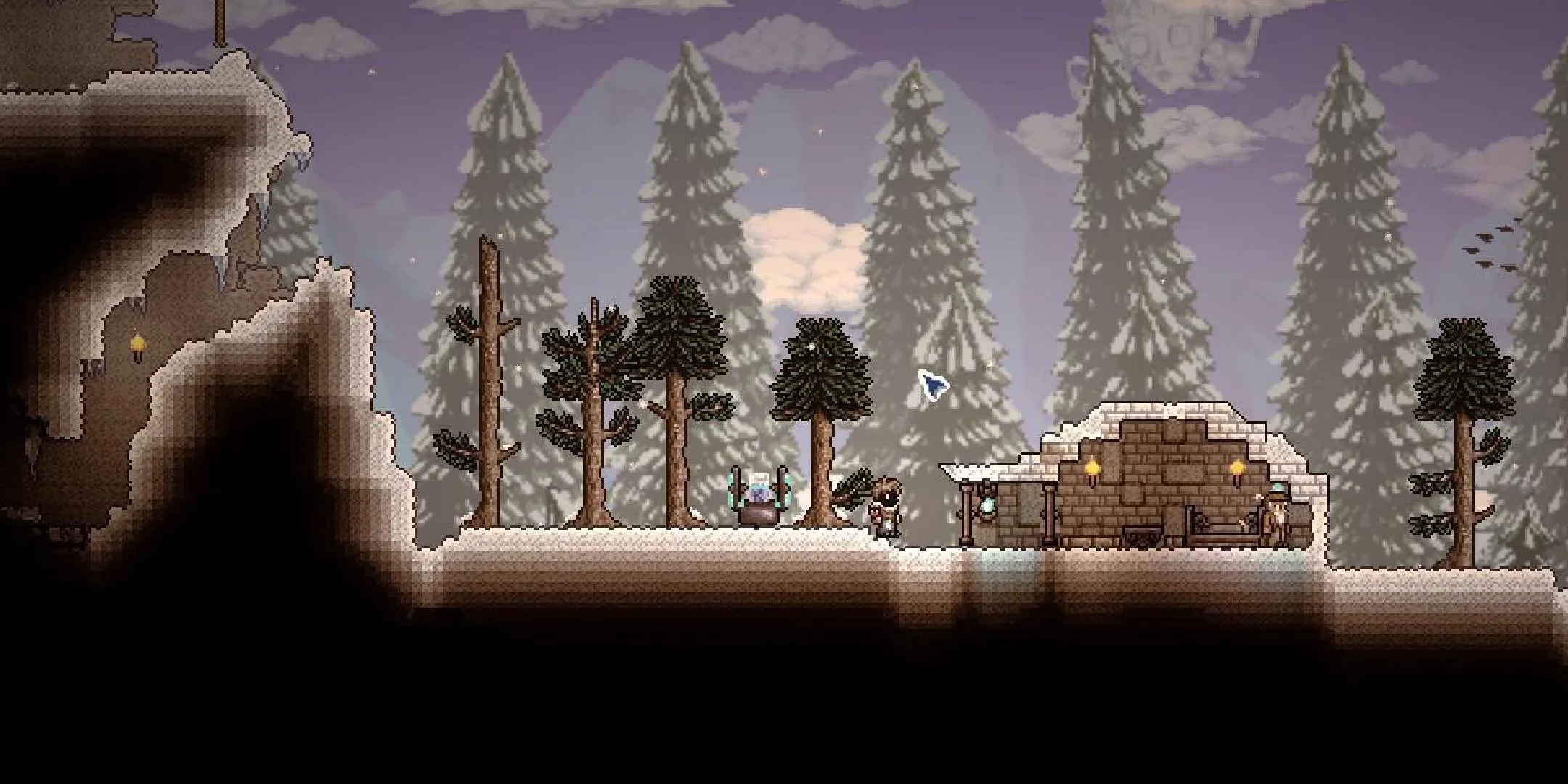
When I first loaded up Terraria, I immediately recognized the familiar mechanics: punching trees for wood, crafting basic tools, and exploring dangerous caverns. But as I dug deeper (literally and figuratively), I discovered this wasn't simply a two-dimensional copy. Terraria transformed Minecraft's open-ended survival into a structured adventure with clear progression milestones. The game's emphasis on boss battles created natural goals that guided my exploration, while the weapon and equipment variety offered combat depth that felt distinct from its inspiration.
What truly amazed me was how Terraria managed to feel both familiar and completely original. The pixel art aesthetic gave it a charming retro feel, while the vertical exploration added a new dimension to the mining experience. Instead of just surviving, I found myself planning elaborate arena constructions for boss fights, creating intricate wiring systems for traps, and collecting rare vanity items that served no practical purpose except to make my character look fabulous. This blend of survival, building, and action-RPG elements created something truly special.
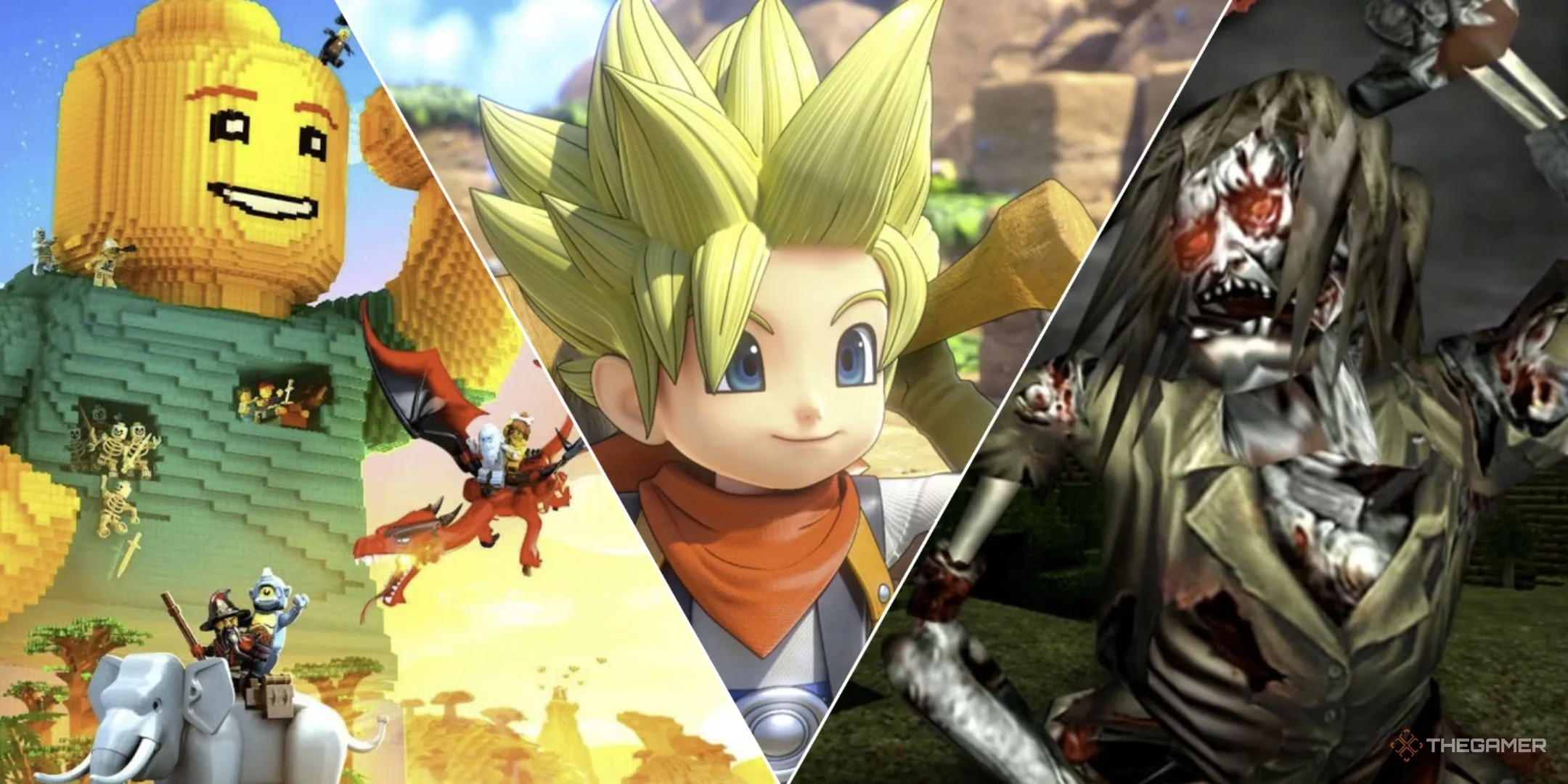
CastleMiner Z: The Edgy Alternative
I remember discovering CastleMiner Z during Minecraft's early years, and it offered a distinctly different atmosphere. While it borrowed the block-based construction and resource gathering mechanics, the game's tone leaned heavily into horror and survival tension. The darker, more realistic textures created an unsettling environment where every shadow could hide danger, and the inclusion of firearms shifted the combat dynamics significantly from Minecraft's medieval approach.
Playing CastleMiner Z felt like exploring a haunted world where survival was constantly threatened. The monster designs were more detailed and frightening, the environments felt genuinely dangerous, and the progression system encouraged careful resource management rather than creative expression. While it lacked Minecraft's polish, it captured a specific mood that appealed to players seeking more intense survival challenges. The game demonstrated how the core Minecraft formula could be adapted to different genres while maintaining its essential appeal.
Lego Worlds: Creative Construction Reimagined
When Lego Worlds launched, I was initially skeptical about how the brick-building concept would translate to a digital sandbox. What I discovered was a delightful fusion of Lego's creative ethos with Minecraft's open-world exploration. The game's copy tool revolutionized how I approached construction—instead of placing every individual block, I could replicate entire structures I discovered during my travels, then customize them to my heart's content.
What truly impressed me about Lego Worlds was how it balanced creative freedom with structured progression. The golden brick system provided tangible goals without feeling restrictive, while the gradual unlocking of new building pieces and tools maintained a satisfying sense of advancement. Unlike Minecraft's more organic world generation, Lego Worlds felt like a carefully curated collection of biomes and structures designed specifically for discovery and replication. The game proved that even established formulas could be reinvented through different creative lenses.
Dragon Quest Builders 2: Story-Driven Crafting
As someone who loves both RPGs and creative games, Dragon Quest Builders 2 felt like a dream come true. The game masterfully blended Minecraft's construction mechanics with Dragon Quest's charming aesthetic and narrative depth. Instead of surviving in a wilderness, I found myself rebuilding civilization from the ground up, completing quests for colorful NPCs, and gradually transforming barren landscapes into thriving communities.
The RPG elements added layers of complexity that traditional sandbox games often lack. Leveling up my character improved my building capabilities, while the equipment system allowed for meaningful progression beyond simply acquiring better resources. The story provided context for my creative endeavors, making every reconstructed town feel like an accomplishment with narrative significance. Dragon Quest Builders 2 demonstrated how sandbox mechanics could serve a larger narrative purpose rather than existing as an end in themselves.
Roblox: The Platform Revolution
My experience with Roblox has been particularly interesting to observe over the years. While often lumped together with Minecraft clones, the platform has evolved into something entirely unique. What began as a simple creation tool has transformed into a massive ecosystem where players don't just build structures—they build entire games. The learning curve from basic construction to Lua scripting represents a natural progression that mirrors Minecraft's own evolution from simple building to complex redstone engineering.
What fascinates me most about Roblox is how it democratizes game development. Young creators can start with simple obstacle courses and gradually work their way up to complex multiplayer experiences. The blocky aesthetic may remind players of Minecraft, but the underlying philosophy is fundamentally different: Roblox isn't just a game, it's a platform for making games. This distinction has allowed it to carve out its own niche while still appealing to the same creative impulses that drive Minecraft's community.
Starbound: Cosmic Exploration
Launching into space with Starbound felt like the natural evolution of the Terraria experience. The game retained the 2D exploration and building mechanics but expanded the scope to an entire universe of procedurally generated planets. Each world offered unique resources, biomes, and challenges, creating an irresistible urge to keep exploring just to see what wonders the next planet might hold.
The progression system in Starbound particularly impressed me with its clever integration of exploration and crafting. Upgrading my spaceship required materials from increasingly dangerous planets, creating a satisfying gameplay loop where each new discovery enabled further exploration. The game's emphasis on colonization and NPC management added strategic depth beyond simple survival, while the story missions provided structure for players who preferred guided experiences. Starbound proved that the Minecraft formula could scale to cosmic proportions without losing its intimate, hands-on appeal.
Cube World: Class-Based Adventure
Cube World's approach to the sandbox genre fascinated me with its focus on character progression and combat depth. While the world maintained the blocky aesthetic Minecraft popularized, the gameplay emphasized RPG elements more heavily than creative construction. Choosing between Warrior, Ranger, Mage, or Rogue classes fundamentally changed how I interacted with the world, with each specialization offering unique abilities and playstyles.
The combat system stood out as particularly innovative, incorporating dodging mechanics, skill combinations, and class-specific techniques that added action-game complexity to the sandbox formula. Exploration felt rewarding not just for discovering resources, but for finding equipment that complemented my chosen playstyle. Cube World demonstrated how role-playing elements could be seamlessly integrated into a voxel-based world, creating a hybrid experience that appealed to both creative builders and combat-focused adventurers.
FortressCraft Evolved: Industrial Complexity
When I first experimented with FortressCraft Evolved, I was immediately struck by its industrial focus. The game took Minecraft's redstone mechanics and expanded them into full-blown automation systems, transforming creative building into logistical engineering. Designing efficient resource collection networks, power distribution systems, and defensive structures required careful planning and problem-solving skills that went beyond aesthetic construction.
The tower defense elements added strategic urgency to the creative process. I couldn't just build beautiful structures—I needed to design functional fortifications that could withstand increasingly challenging enemy waves. This combination of creative freedom and practical necessity created a uniquely engaging experience where every design decision had tangible consequences. FortressCraft Evolved proved that sandbox games could incorporate complex systems without sacrificing accessibility, appealing to players who enjoyed both creative expression and strategic planning.
The Legacy Continues
Looking at the current gaming landscape in 2026, I'm amazed by how far these inspired creations have evolved. What began as attempts to replicate Minecraft's success has blossomed into a rich tapestry of experiences that honor the original while exploring new creative territories. Each game mentioned here has contributed something valuable to the genre:
-
Terraria showed how 2D perspectives could offer unique exploration experiences
-
CastleMiner Z demonstrated how atmosphere and tone could transform familiar mechanics
-
Lego Worlds proved that established brands could innovate within the sandbox format
-
Dragon Quest Builders 2 illustrated how narrative could enhance creative gameplay
-
Roblox revealed the potential of player-driven content creation platforms
-
Starbound expanded the scope to cosmic proportions
-
Cube World integrated RPG elements seamlessly
-
FortressCraft Evolved added industrial and strategic complexity
These games collectively demonstrate that Minecraft's true legacy isn't in its specific mechanics or aesthetic, but in its fundamental philosophy: giving players tools to shape their own experiences. As technology advances and creative visions expand, I can only imagine what new innovations will emerge in this endlessly fascinating genre. The blocky revolution that began with Minecraft continues to inspire developers and delight players, proving that creativity, when given proper tools and freedom, knows no bounds.